Conrad Brent e-Books Are Live

June 8, 2013

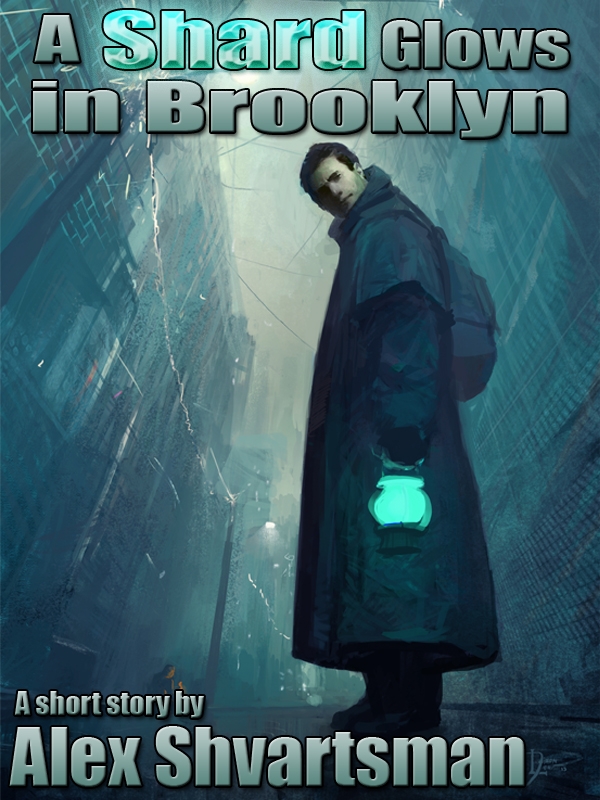
My signature urban fantasy series combining gritty noir and corny humor are now available as e-books, with an amazing cover (art by Dixon Leavitt and layout by Emerson Matsuuchi). Check them out:

A Shard Glows in Brooklyn

Requiem for a Druid

The books are currently live on Shashwords and will be going live on Amazon and B&N over the next day or two. I will post the other links once they’re live.

If you enjoy my writing, these stories are essential, because they form a prelude to my novel! I will be working on a much longer Conrad Brent story later this summer.

A Shard Glows in Brooklyn at Smashwords

Requiem for a Druid at Smashwords

#SFWApro


Really? A Novel With a Message?

June 6, 2013

The following is a guest post by Luc Reid who recently launched a Kickstarter campaign to help fund the research for his upcoming novel “The Town at World’s End” — a story about a struggling town, based on real strategies for fighting climate change.

Balancing an engaging and entertaining story with Luc’s stated goal of laying out a clear and practical path for actual communities to follow is no easy task. I asked him to talk about the challenges of undertaking such a project and he was kind enough to write the insightful post below.

townworldsend


Really? A Novel With a Message?

By Luc Reid

Telling stories with an ulterior motive is not a well-respected activity. Samuel Goldwyn, then head of MGM Studios, famously told his producers “If you want to send a message, use Western Union,” and the sentiment carries over into fiction–with good reason. Human beings love stories by nature, but we aren’t naturally enthusiastic about being lectured to.

Yet every once in a while, a novel with a message works, or even becomes a classic of literature, for instance George Orwell’s 1984 or Harriet Beecher Stowe’s Uncle Tom’s Cabin. Both of these books championed ideas and created debate and interest in their topics.

Other non-fiction-in-novel-form books, by contrast, have succeeded despite having very questionable literary value. Psychologist B. F. Skinner created a fictional vision of an intentional community in his novel Walden Two, which was powerfully influential and even inspired groups to go out and do their best to make his vision come true. That book remains a top seller, and yet as a story it falls somewhere between “Where’s the conflict?” and “Don’t quit your day job.”

Other writers have had similar story-challenged successes, like Ernst Callenbach’s Ecotopia and Dr. Eliyahu M. Goldratt’s novel of manufacturing efficiency measures, The Goal: A Process of Ongoing Improvement–which as of this writing ranks at #1,269 on Amazon out of all books, despite having been written in 1984 and having no real characters to speak of.

These successes may seem surprising or contradictory of basic common sense about writing, but I think they teach us the same lesson as The DaVinci Code, Twilight, Slaughterhouse Five, Zen and the Art of Motorcycle Maintenance, The Lord of the Rings, 50 Shades of Gray, or Ulysses: that success for a novel isn’t a measure of a single, universal characteristic, or even a measure of how certain universal characteristics work together. Instead, the question is to what extent the novel hits a nerve or fills a need. That need can be romance, escape, enlightenment, intellectual engagement, wish fulfillment, or a way to increase plant productivity by 18%–it just has to be some meaningful and widespread desire.

I worry about my current project, a novel called The Town at World’s End, for which I’m currently running a Kickstarter campaign you can get to through www.TheTownAtWorldsEnd.com . It’s a novel about solving climate change on the community level, about how one struggling town transforms to stop contributing to the problem and build resilience. The thing is, climate change is an issue people tend to avoid if they possibly can. The novel paints a picture of a way of living that’s rewarding and sustainable, and I think the specifics of that lifestyle are very attractive and would enrich people’s lives–but will readers feel the same? Will people seek the book out because they want to find something positive and motivating about climate change, or avoid it because the topic is usually so depressing?

So far, having just launched the campaign the other day, the signs are very tentatively positive. I have a small number of backers, one of whom has even claimed one of the biggest rewards, the chance to name a city and a climate-related disaster that destroys that city.

Even apart from its climate change-related advantages, I intend for this to be a hell of a novel, and I have enough successful fiction writing experience that the prospects look good for that. Still, we’ll have to see. Regardless of whether you’re writing a standard epic fantasy novel or something unusual and possibly ill-advised, like my project, there are variables both of how strong the need is for what you’re providing and how well you speak to those who have that need. Good luck with your next story or book–and wish me luck with mine!


A Weekend in Jersey

June 6, 2013

I’ll be spending a lot of time in New Jersey this weekend.

On Saturday at 8pm I will be a guest speaker at the monthly meeting of the Science Fiction Association of Bergen County which will take place at the Barnes & Noble store in Hackensack.

On Sunday, I will be at Books NJ all afternoon, to help promote UFO Publishing. You can find me at the SFABC table there.

In completely unrelated news:

* True Love, a SF flash, was published by Daily Science Fiction today. It was e-mailed to the subscribers. A week from now it will go live on the web site, and I will post a link.

* Interstellar Fiction accepted “The Sgovari Stratagem,” a stand-alone sequel to “The Dragon Ships of Tycho,” for publication in their August issue.


Market Report: Betwixt Magazine

June 2, 2013

Click here for detailed guidelines.

Genres: Speculative fiction

Length: 1000 to 30,0000 (4000-7000 preferred)

Pay rate: $0.02/word up to $150

Rights: First worldwide English-language serial, electronic, and print rights. 3 months exclusivity from the date of publication.

Editor: Joy Crelin

Betwixt is a new magazine, open to all kinds of speculative fiction, which is launching its premier issue this fall.  Ms. Crelin was kind enough to answer additional questions about her publication:

###

Will Betwixt stories be published for the readers to enjoy on the web for free, or will they be behind a pay wall?

Stories will be free to read online, but ebook and print-on-demand issues will also be available for purchase.

How large do you anticipate each quarterly issue to be? How many stories and/or words?

We’re officially planning to include four stories in each issue, but we may go up to five or six if some of the stories are particularly short.

What niche/role do you hope for Betwixt to fill among the speculative fiction markets? How would you describe an ideal Betwixt submission?

I envision Betwixt as a magazine that publishes a little bit of everything, is always eclectic but never wishy-washy, and introduces readers to genres, styles, and themes they never knew they liked.

The ideal Betwixt submission is well written, thought provoking, and entertaining. Perhaps most importantly, it’s a story, not simply a showcase for a particular character, setting, piece of technology, alien species, system of magic, political ideology, or what have you. Those things are all great, but they don’t constitute a story on their own.

Your guidelines are quite welcoming of various genres. Are there any themes, styles, or tropes that you do *not* want to see, or that are “hard sells” for you?

I’m reluctant to say that I definitely don’t want to see something, because if a writer can take tropes or themes I’m sick of and make them into something fresh and compelling, I want that story! That said, there are a few kinds of stories that are hard sells for me. I’m unlikely to buy horror stories that don’t have any fantastic or otherworldly elements, stories with child protagonists, or stories that rely heavily on flashbacks–unless they’re absolutely killer. Apocalyptic/postapocalyptic, zombie, and fairytale-influenced stories are relatively common, so submissions will need to have something special in order to stand out. I’m also generally not interested in stories that take place within fandom or the publishing industry.
Oh, and I don’t take kindly to stories that are racist, sexist, homophobic, or otherwise terrible, but that really ought to go without saying.

How about humor? Will you publish lighter, or outright humorous stories? What sort of humor works or doesn’t work for your tastes?

I love humorous stories and would be delighted to publish some in Betwixt. As both an editor and a reader, I don’t have the energy to be serious all the time—it’s exhausting! However, humorous stories will probably be another hard sell, simply because humor is extraordinarily subjective, and I’m picky. Writers interested in submitting to Betwixt should avoid puns and “random” humor, but otherwise, try me!

What prompted your decision not to consider flash fiction (stories under 1000 words) for publication in Betwixt?

Honestly, flash fiction just isn’t my area of expertise.

What is your internal process? Do you have slush readers or are you reading and considering submissions on your own?

I have a first reader who helps me log and sort submissions, but I make all the final decisions and send out rejection and acceptance emails myself.

Why did you decide to launch a new magazine? Do you or the members of your team have any previous previous editorial experience or publishing credits?

I had several reasons for starting Betwixt, some better than others. I suppose the simplest reason is that I love speculative fiction and want to play a more active role in and contribute more to the field.

I’ve been editing in one way or another since 2007. I joined Circlet Press in 2009 and have edited several anthologies of erotic speculative fiction, most recently the forthcoming Wired Hard 5, as well as various single-author works and other odds and ends. At my day job, I edit proprietary nonfiction content for an educational/reference publisher. I also freelance from time to time and previously served as a convention intern for the science fiction and horror magazine New Genre.

The first issue launches in October. What is the deadline to submit for those who hope to have their accepted stories appear in this issue?

That really depends on the submissions I receive. If I get four excellent stories tomorrow, then I’ll accept them for issue 1 and move on to accepting stories for issue 2. If it takes me a while to fill the issue, though, then there will be more time to submit. I’m tentatively planning to close to submissions for the month of September, so I suppose we could consider that a deadline.


UFO2 Update

June 1, 2013

ufo2

Submissions are now closed for UFO2. We received well over 600 unsolicited submissions in addition to the stories from authors whom I asked directly to contribute to the book.

Most of the round 1 submissions have been read and responded to. All, or almost all will be responded to in the next 48 hours. At that point I’ll take about a week and reconsider all final-round stories, re-read comments and suggestions made by the associate editors, and send out the rest of the acceptances.

Once all the contracts have been signed and the TOC finalized, I will post the final line-up here.


Non-fiction Wednesday

May 22, 2013
Artwork by Andres Mossa

Artwork by Andres Mossa

I have two small non-fiction write-ups out at some highly prestigious places today.

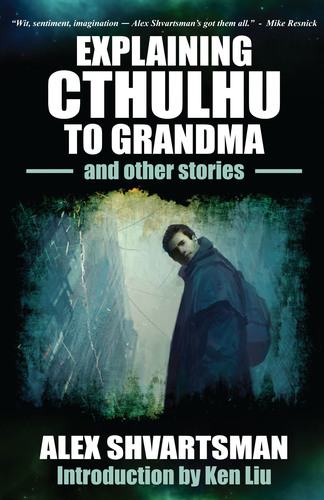
First up are the story notes for Explaining Cthulhu to Grandma which I wrote for the IGMS blog.

And second is another SF Signal Mind Meld where a plethora of science fiction authors are asked their opinion about the literary appeal of gods, goddesses, and myths.


My 2013 BaltiCon Schedule

May 21, 2013


I am going to spend four fun and very busy days at BaltiCon this weekend. My schedule is full of fantastic events, panels, and even an author gala. Here’s where I’ll be:


W-4 Broadening Horizons
Friday, 4pm, Salon C (50 minutes)
Moderator: Joy Ward
Panelists: Alex Shvartsman, Walt Boyes
How can writers reach potential readers outside of their immediate science fiction markets?

Author Gala
Friday, 5pm, Con Suite (2 hours)
Meet and greet with over 20 SFWA authors, including BaltiCon guest of honor Joe Haldeman

LE-4 Editor’s Pet Peeves
Saturday, 9am, Salon C (50 minutes)
Moderator: Michael A.Ventrella
Panelists: Danielle Ackley-McPhail, Alex Shvartsman, Leona Wisoker, Walt Boyes
A head’s up for writers on what editors don’t like to see or deal with from their authors. Headaches they’ve encountered in publishing.

G-5 Portable/Pocket Games
Saturday, 1pm, Parlor 1041 (50 minutes)
Moderator: Donna Dearborn;
Panelists: Eric Hymowitz, Alex Shvartsman, Krystina Lynch
All about games for entertainment anywhere!

P-11 Saturday, 10pm, Salon B (50 minutes)
Moderator: Alex Shvartsman
Panelists: Christine Norris , Eric V. Hardenbrook
A discussion about new magazine s that have come and gone, new zines that seem to have staying power, and short-lived publishing houses.

W-17 Writing, Selling and Publishing Humorous SF/F Fiction
Sunday, 9am, Salon B (50 minutes)
Moderator: Alex Shvartsman
Panelists: Stephanie Burke, Collin Earl, Phil Giunta, Sarah Pinsker
Panelist discuss how writing humor differs from “straight stuff”, both in the writing process and in the submission/marketing process.

P-10 From Slush to sale
Sunday, 1pm, Salon B (50 minutes)
Moderator: Sarah Pinsker;
Panelists: Scott H. Andrews, Damien Walters Grintalis, Alex Shvartsman, Christine Norris, Hildy Silverman
A detailed discussion on every aspect of the process of creating and publishing a professional and semi-pro magazine.

G-12. You Have Gaming in My Fiction
Sunday, 2:30 PM, Parlor 1041 (1 hour, 20 minutes)
Moderator: Neal Levin;
Panelists: Mike McPhail, Alex Shvartsman, Michael A. Ventrella, Jagi Lamplighter, Jon Sprunk
All about how to write media tie-in fiction for games

BL-2 The Dark Quest Books Mega-Launch
Sunday, 7pm, Frankie & Vinnies
Dark Quest Books launches their Spring 2013 titles with guest editors and authors:
Danielle Ackley-McPhail (“The Eternal Cycle”), Danny Birt, Jack Campbell (“The Lost Fleet series”), Myke Cole, Judi Fleming, Charles E. Gannon, Elektra Hammond, Eric V. Hardenbrook,
C.J. Henderson (“Teddy London”), Mike McPhail) , Bernie Mojzes, Christine Norris, KT Pinto, James Daniel Ross (“Radiation Angels”), Alex Shvartsman, Maria V. Snyder, Jim Stratton, Patrick Thomas (“Murphy’s Lore”, Robert E. Waters, and John C. Wright (“Chronicles of Chaos”), Jeff Young

R-47 Plotters vs Pantsers
Monday, 10am, Parlor 1041 (50 minutes)
Moderator: Michael A. Ventrella
Panelists: Jack Campbell (Hemry), Doc Coleman, Kat Otis, Jennifer Povey, Alex Shvartsman, Leona Wisoker
Do You Plan your Story or Write by the seat of your Pants? Panelists share the quirks and foibles of their working method with
readers. A Round Table discussion.

R-42 Is Science Fiction Giving Up on the Future
Monday, 11am, Salon B (50 minutes)
Moderator: Carl Cipra
Panelists: Michael D’Ambrosio, Darrell Schweitzer, Alex Shvartsmaon, Eric V. Hardenbrook
It seems ironic, in a time of such technical progress, and when we are confirming that the galaxy really does contain billions of planets, but a lot of science fiction seems to turn away from the future, as if, post-Singularity, it will be impossible to describe. Are alternate history and steampunk merely symptoms of a more general evasion of the future?

There are many other exciting panels and events at this excellent convention. You can download the complete listing here.

Publication: The Tinker Bell Problem in Buzzy Magazine

May 17, 2013

My humor story “The Tinker Bell Problem” was published today at Buzzy Magazine. I really like this little story (written for the Codex Mega Weekend Warrior contest). It’s about a demon who summons up a human via a pentagram, to do his bidding.

Here’s a brief sample:

Herbert sat upright, which sent a minor nuclear apocalypse through his skull. He was totally naked, sitting on the ground inside of an elaborate pentagram.

A large five-pointed star was drawn on the floor in a gooey red substance which Herbert dearly hoped wasn’t blood. A wider circle was drawn around the star. A variety of symbols were sprinkled along the circumference of the circle. Herbert recognized a peace sign, a stop sign, a smiley face, and a Pepsi logo in the mix.

The story is free to read on Buzzy’s web site. Check it out.


UFO2 Submissions Update – May 17

May 17, 2013

ufo1

We read just over 350 submissions to date.  Everyone who submitted prior to 5/12 should have heard from us by now. If you haven’t, please query ASAP.

I accepted seven stories so far, totaling 35,000 words. There are three more invited headliners who haven’t turned in their stories yet (they aren’t late; they have two more weeks) so that’s up to 18,000 more words. That means the competition for the remaining space in the book is going to be very, very tough. We are holding on to nine more stories in the final round of consideration so far, and more are sure to be added to that list. Already had to turn down some truly excellent stories and there’s a long road to travel yet.

Any reasonably good anthology, magazine issue, or contest gets far more quality submissions than they can use. It’s the nature of our field — supply always greatly outpaces demand. So if you got a rejection from us, or from anyplace else, please don’t take it personally. The editors aren’t merely looking for a good story — they’re looking for stories they can fall in love with. And that’s a very tough act to pull off, especially since tastes are highly subjective. Just keep sending it out there, until the story finds the editor who will think it’s perfect.


Publication: “Things We Leave Behind” in Daily Science Fiction

May 10, 2013

dsf

“Things We Leave Behind,” which was e-mailed out by Daily Science Fiction a week ago and premiered tonight on their web site, is the most personal story I’ve ever written.

As I pointed out in the story notes, much of it is autobiographical. Like the protagonist/narrator of this tale, I was born in the Soviet Union and my family ended up immigrating to America, after much debate between my headstrong mother and bookish father.  Just like the protagonist’s father, my dad collected books — which involved buying and selling them on the black market. And although the protective magic created by the books in this story stems from my imagination, every avid reader will agree that there is an undeniable and unique brand of magic in books, no matter what language they’re written in.

Read the story here.