On the Merits of Automation

July 7, 2013

Writing the first draft of a new story is always a lot of fun. You get to describe lush settings and exciting action, and have your characters say witty things. You don’t have to worry about the minor details, consistency, or proper punctuation. All of that comes later. The first draft is about getting your idea on paper.

Then comes the not-so-fun part of edits. By the time the story is finished, the author may have read it three or four times if they’re an expert (or think they are), and possibly as many as twenty times if they’re still learning the ropes or tend to do much of the heavy lifting in revision. After the first several reads it becomes very difficult to identify a basic problem in a story, such as an orphaned word left over from the previous draft or a bit of poor phrasing. Everything about the piece becomes so familiar, it is difficult to “turn off” that familiarity in order to hunt down errors.

Writers have different rituals for dealing with this. A very common and successful method is to put away a completed story for a week plus, so that you may return to it with a fresh eye, having forgotten some of the details. Other writers will read the story out loud, looking for spots where the prose sounds awkward. Others read the story from back to end, one paragraph at a time. This allows them to concentrate on the spelling and punctuation and not the plot or flow of the story.

The most effective method by far is to get another pair of eyes on your story. Swap with another writer of similar (or, preferably, greater) ability. Have them catch many of the little problems you missed, and you do the same for them later. This is my own preferred method. Every story I complete, I share with at least two or three critique partners. Each of them finds some issues with the story, which I consider before revising. Then it’s off to another couple of readers. Then and only then do I send the story out on submission.

Professional book and magazine publishers are big fans of this method as well. If your story is accepted, the editor may do some developmental edits with you, but after they’re done the story is always passed along to a copy-editor. A copy-editor is like a beta reader, but better. They are sentence-structure masters and punctuation ninjas, and can usually quote the Chicago Manual of Style (or whatever the publication’s preferred style guide is) from memory. A good copy-editor can make a tremendous difference in the quality of your book or short story.

Which begs the question — should you avail yourself of the services of a freelance editor *before* the story or novel goes out on submission, to improve your chances?

Sadly, in most cases the correct answer is no. Not because they won’t improve your work — far from it, but because it rarely makes sense financially. A good editor will charge somewhere around $30 an hour. It will cost $750-1000 to have an entire novel thoroughly edited. A 4-6000 word story may run you $50 or so, which is a huge percentage of what you can hope to earn from its sale, even if it’s placed with a pro-paying market.  There are editors who will work cheaper, and while a tiny percentage of them are brilliant people who’re just starting out, in most cases you won’t get the sort of professional a big New York publisher would hire working at deep discount rates.

So what should you do to ensure that a manuscript you’re about to send to your favorite editor or agent isn’t a hot mess?  In addition to the methods I described above, you can also take advantage of some automated tools.

Your first step is to get the most up-to-date copy of Microsoft Word  your computer can run. It does a fairly good job catching not only typos but also poorly constructed sentences and a plethora of other annoying problems. It constantly amazes me how many writers default to antiquated or free word processors in order to save a few bucks. If you plan on becoming a gourmet chef, you wouldn’t buy your knife set at a 99c store. You would get the professional quality tools.  Writing doesn’t require you to spend a lot of money up-front on supplies the way painting or sculpting does, so if you plan on writing for hours on end don’t skimp on the essentials — a comfortable chair, a good keyboard, and the best word processor program. For the record, I don’t own a Mac. There may be wonderful word processor options for the Mac that are infinitely better than MS Word, or there may not be. I just don’t know. But I have tried various PC options including Google Docs, OpenOffice and Libre Office and found the Microsoft product to be superior (which is a statement I don’t make easily as a huge Google fan).

The next step would be to try out Grammarly.
grammarly

When I first discovered this web-based service, I was highly skeptical.It bills itself as “the world’s best grammar checker” and claims to “correct up to 10 times more mistakes than popular word processors.” But can they really automate copy-editing? Certainly no software, whether it’s from Microsoft or from these folks, is a substitute for a live copy-editor.  The technophobe in me was curious, and I took advantage of the review account the PR people at Grammarly were kind enough to provide me with.

I loaded a number of manuscripts into Grammarly to see if it might be useful. Predictably, it did little or nothing to help improve highly polished manuscripts that were already copy-edited by a professional. The “errors” it found were mostly unorthodox sentence structure and dialog, places in the manuscript where text structure is intentionally less-than-neat. The software couldn’t compute the difference between bad writing and artistic license, nor should it be expected to.

The results were much better when I loaded unedited first drafts. It helped identify missing or misplaced commas, tense problems, and a few actual sentence structure issues that were in legitimate need of fixing. Given that it took only a few seconds to run the text through this software, it certainly didn’t hurt to fix some of the problems before sending the story draft to crit partners.

Since showing is better than telling,  I loaded the 1000-word chunk of text above into Grammarly after I wrote it, and without going back to do any edits. Here are the issues it identified and suggestions it made:

* The results were much better when I loaded unedited first drafts. <- Grammarly suggested I review this sentence for incomplete comparisons.

* Remove the comma here: “put away a completed story for a week plus, so that you may return to it with a fresh eye”

* Add the comma in front of  “as well”: “Professional book and magazine publishers are big fans of this method as well.”

* Remove the comma here: “They are sentence-structure masters and punctuation ninjas, and can usually quote the Chicago Manual of Style…”

* Reminded me to add a space after this period: “I was highly skeptical.It bills itself…”

Each suggestion comes with citations from the rules of English grammar which are often a good read, especially for those who aren’t already masters of the language. My overall takeaway is that this service is awesome for academic purposes, especially for high school and college students who are trying to improve their “proper” writing. It is less effective for professional wordsmiths, but  can still offer enough value to justify its price point. At $30 per month I wouldn’t use it on a recurring basis for one or two short stories that I write per month, but would probably buy a month’s subscription to run a novel-length manuscript through the software before showing it off to an agent or a publisher.

And while I stated above that it doesn’t pay to have your manuscript professionally edited by a live human if you plan on submitting it to publishers, you should absolutely make such an investment if you plan on self-publishing it. Too often, self-published books suffer from poor grammar and punctuation, and contribute to the already-tarnished image of self-published writers, hurting some really talented folks who are using the platform alongside the unedited masses.

There are many great freelance editors out there who are willing to take on new clients. The one I have worked with personally and can highly recommend is Elektra Hammond.

What live editors and electronic aides do you recommend?


Publication: One Thousand and First in 16 Single Sentence Stories

June 26, 2013

sss#SFWApro

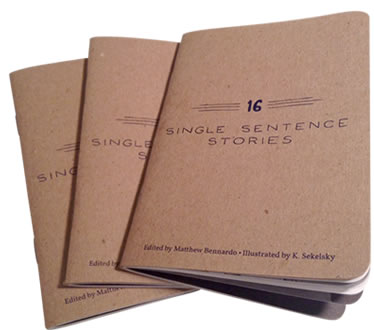
A collection of single sentence stories edited by M. Bennardo and designed/illustrated by K. Sekelsky is now available, and includes my story “One Thousand and First.” You can buy the cool little booklet for only five bucks. Better yet, you can have the PDF version for free! Buy or download it here.


COFFEE Anthology Update

June 25, 2013

Click here to view the COFFEE anthology campaign on Kickstarter

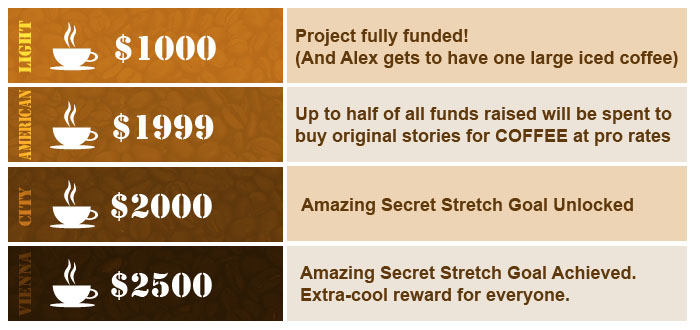
We had an awesome opening 24 hours, raising 45% of the initial funding goal. Things are bound to slow down after this, but I’m very hopeful that this campaign can reach a total of $2500+ by the end of its 30-day run.

Up to 50% of the money raised between $1000-$1999 will be spent buying original stories, in addition to reprints. (The limit being only the quantity and quality of the stories I might see on submission) — at professional rates.

At $2000 I will announce the super-secret achievement (and I am pretty sure you will really like it!) which will be unlocked at $2500. For now, please spread the word of this project. There are gazillions of coffee fans out there and this book can be huge if we are able to get even a fraction of them aware/involved in th is project.

I am waiting on some contracts and hope to announce the first pair of stories contracted for COFFEE really soon.

coffeechart#SFWApro

Remember, we’ll open to original story submissions the moment this campaign reaches $1000.  So start thinking of a cool (or hot!) coffee story idea!


The COFFEE Anthology Launches, Seeks Submissions & Funding

June 23, 2013

coffee

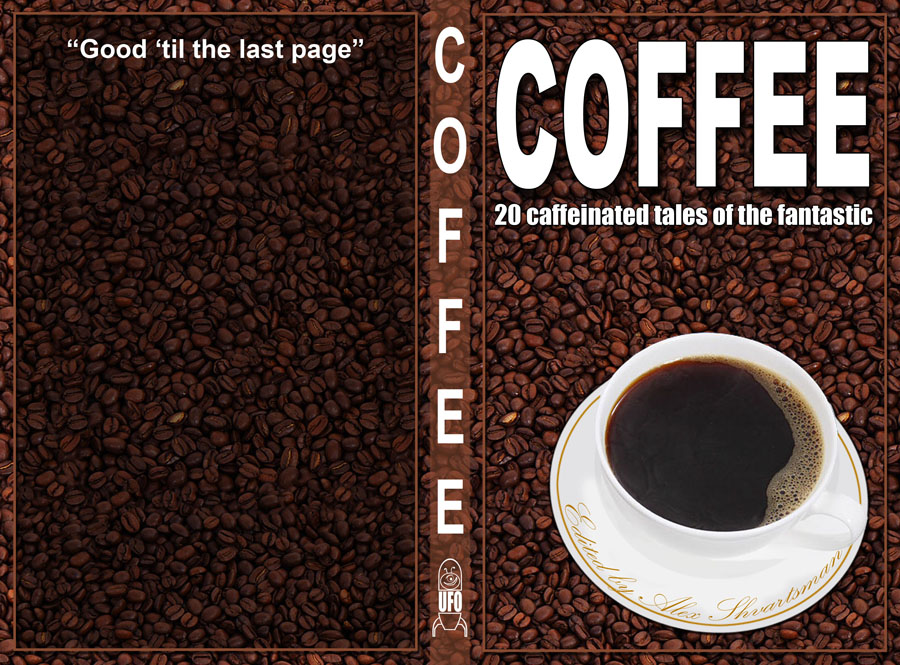
UFO Publishing launches COFFEE: Caffeinated Tales of the Fantastic.

We’re seeking to collect 40-50,000 words of fiction where coffee or tea is an integral part of the plot in some way. For the moment we’re considering reprint stories, but will be able to purchase some original fiction if the anthology is fully funded via Kickstarter.

The Kickstarter campaign launched tonight to help fund this anthology. We’re offering great rewards such as copies of the three released and upcoming UFO Publishing titles (UFO, UFO2, and COFFEE), posters of Maggie McFee’s “Boom” artwork (pictured below), and other cool items.

Please help us by spreading the word of this campaign via social media, and pre-ordering copies for yourself and all the coffee addicts in your life!

#SFWAPro


"Boom" by M. McFee. Get a poster as one of the Kickstarter backer rewards!

“Boom” by M. McFee. Get a poster as one of the Kickstarter backer rewards!


UFO2 Table of Contents

June 19, 2013

The following stories will appear in Unidentified Funny Objects 2, tentatively scheduled for a September release:

Mike Resnick – On Safari
Robert Silverberg – Hannibal’s Elephants
Ken Liu – The MSG Golem
Jim Hines – Stranger vs. the Malevolent Malignancy
Matt Mikalatos – A Stiff Bargain
Fran Wilde – How to Feed Your Pyrokinetic Toddler
James Beamon – Class Action Orc
Jody Lynn Nye – Insider Information
Esther Friesner – Service Charge
Tim Pratt – The Retgun
Josh Vogt – The Girl with a Dagon Tattoo
Konstantine Paradias – How You Ruined Everything
Desmond Warzel – One Thing Leads to Your Mother
MCA Hogarth – Improved Cubicle Door
Wade Albert White – The Wiggy Turpin Affair
Michelle Ann King – Congratulations on Your Apotheosis
JW Alden – Item Not As Described
K.G. Jewell – The Haunted Blender
Heather Lindsley – The Diplomat’s Holiday

There are 19 stories total (compared to 29 in UFO1) but most of them are longer, with only a few very short (flash) pieces included this time. The two books are roughly the same length.

Arnie Swekel is currently working on the cover. I hope to have a sketch to share in a few weeks.

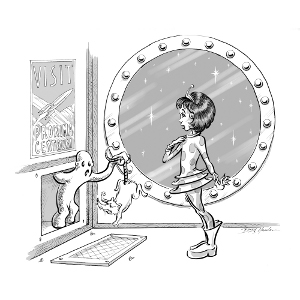
But wait, there’s more! Nine of the stories in UFO2 will feature unique illustrations by Barry Munden (and he will draw a tenth piece to use as a header for all the stories). Here’s a preview sample, the illustration for Ken Liu’s “The MSG Golem:”

#SFWApromsg_golem_smalll


COFFEE Anthology Submission Guidelines

June 17, 2013

coffee


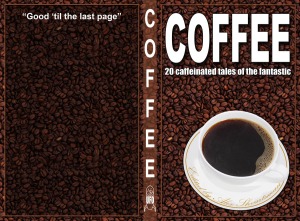
I’m moving forward with the COFFEE anthology  (See the cool preliminary cover above, designed by Emerson Matsuuchi).

Each story must somehow involve coffee as a major plot element. It’s not enough if an unrelated story is set in a coffee shop. I will also consider a few TEA stories as well. These stories must feature an element of the fantastic (fantasy, SF, light horror). No literary fiction please.

For the moment, I will only consider reprints.  If you published a story that you feel might fit the theme, please e-mail it to me at ufopublishing at gmail dot com. Please include information as to where and when it was first published, and confirm that the rights have reverted to you.

Pay: $0.01 per word plus one contributor copy of trade paperback and ebook

Rights:  Non-exclusive English worldwide print and electronic publishing rights.

Length: Up to 4000 words. Flash (500-1000 words) especially welcome.

Policies: Simultaneous and multiple submissions are both OK. Since these are reprints, I may take several months to respond as I won’t be holding the stories hostage and away from being considered elsewhere. I will be reading submissions until the book is filled, but no later than until end of summer. I will post a more detailed time frame soon.

There is some possibility that I’ll solicit 0riginal material for this book in the future. However, at the moment please send reprints only.

#SFWApro


Father’s Day Fiction

June 16, 2013

Josh

Happy father’s day to all the dads out there!

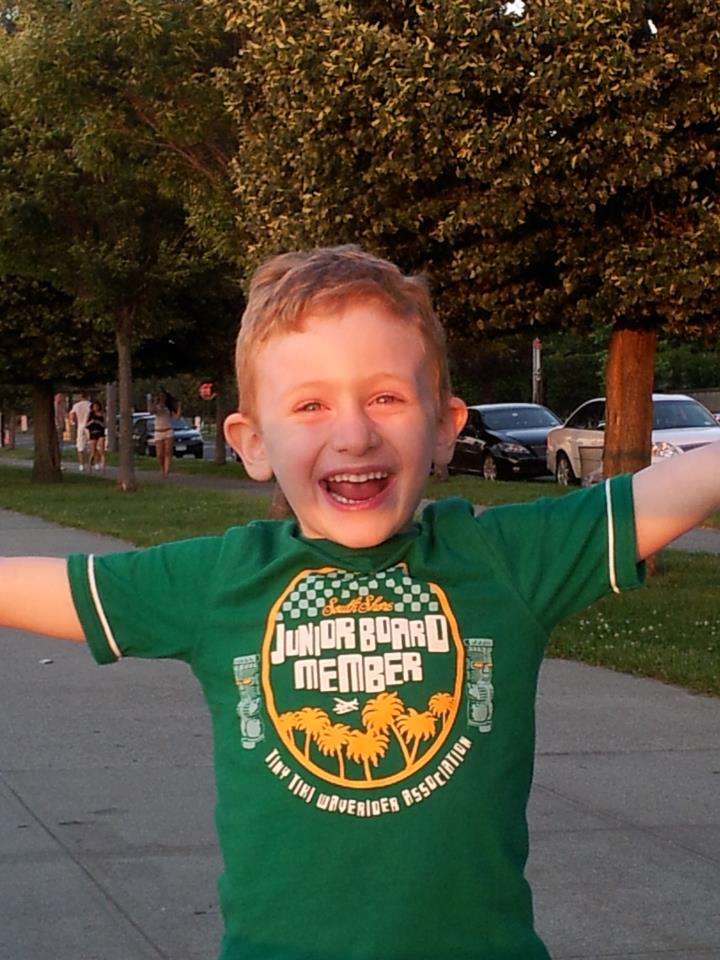
It occurs to me that I write a fair amount of fiction centered around a father-child relationship. Undoubtedly, being a father myself has much to do with that (that’s my son Josh in the photo above). I selected a few of my favorite father’s day stories which are posted online:

Nuclear Family at Kasma SF – Very short. Caution: this is not a festive story.

Things We Leave Behind – Daily SF – This story is dedicated to my own father and largely inspired by my experiences of emigrating from the former Soviet Union.

The Tinker Bell Problem – Buzzy – A humorous take on the subjects of faith and family.  Family ties aren’t exclusive to humans!

Enjoy, and please share links to your favorite father’s day stories in the comments!

#SFWApro


Publication: True Love at Daily Science Fiction

June 14, 2013

dsf

True Love” is now live at the Daily Science Fiction web site. This is a very short, sweet science fiction story that seems to have been well received by the readers so far. I hope you enjoy it as well!

#SFWApro


COFFEE: The Anthology

June 10, 2013

KONICA MINOLTA DIGITAL CAMERA

I am almost done with the final selection process for UFO2. Over the course of this week, all authors should be notified and those whose stories have been accepted will receive their contracts. Once all the contracts have been signed, I will announce the official table of contents.

While that’s happening, I am contemplating my next anthology idea. Namely, this:

COFFEE: The Caffeinated Stories of the Fantastic

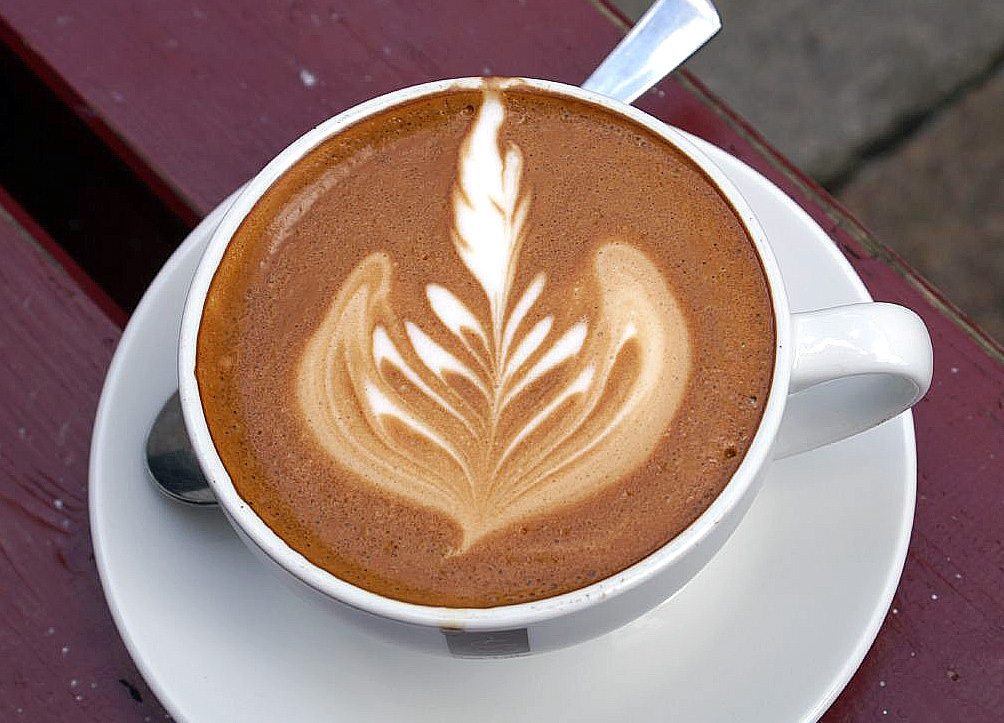
This is not a submissions call as of yet — I am still contemplating the viability and interest in such a book. It would be a collection of speculative short stories in which coffee plays a major role. I would want to collect mostly flash fiction and short-short stories — the sort one can read while sipping a cup of coffee. I would want one or two tea stories as well. Because, as much as the Interwebs love coffee, some of us love tea, too.

I would be looking for reprints for this book: stories that have been already been published elsewhere rather than original material.

So, for now, I want to ask for everyone’s help.

Is this the sort of book you would buy?

Do you know of any stories that would be a good fit for such a book? If so, please post the link or any information you have about the story/stories in the comments below.

If you’re an author of a story that might be a good fit, you can send it to me at ufopublishing at gmail dot com. I want to stress again that this is not a submission call yet, I’m just exploring the possibility, and that I’m looking for reprints of speculative (fantasy, SF, mild horror) stories only. Published authors would be paid at the reprint rate of $0.01 per word, plus a copy of the book.

Please share whatever other thoughts/ideas you might have about this. They’re much appreciated.

#SFWApro


I Totally Look Like a Writer in This Photo

June 9, 2013

AlexBN0613

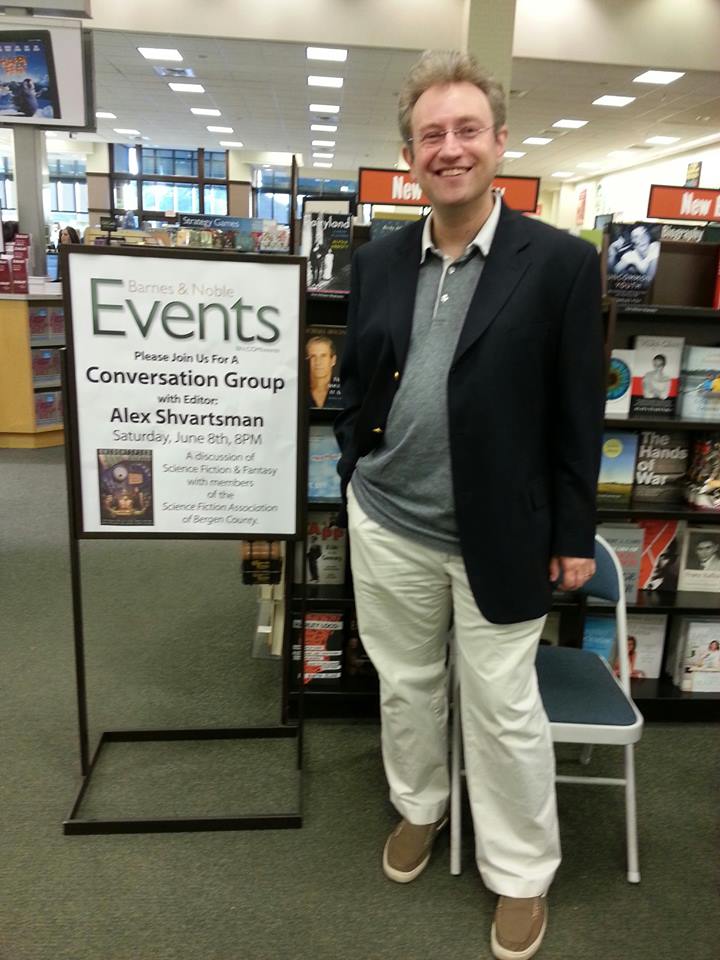
The speaking engagement at the Hackensack Barnes & Noble last night went wonderfully well. There were about 20 people in the audience. The host, Philip De Parto, did a wonderful job organizing the event and steering the conversation, and the readers in the audience were friendly and engaged.

Today I’m heading back to NJ for the BooksNJ Expo at the Paramus public library. A hectic but fun weekend of author/editor events.

#SFWApro