This post originally appeared at Locus Online, on February 1, 2015.
Now that I have five completed anthologies under my belt, the number of questions I get–from friends and strangers alike–about various aspects of anthology editing has turned from an occasional drip to a steady trickle. And while I would love to presume it’s because I’m such an awesome anthologist, the truth is, there’s fairly little information on the web regarding this niche topic. I thought it might be a good idea to collect some basic suggestions in one handy blog post. (Also, I’m incredibly lazy, and pointing people to a link is easier than cut/pasting chunks of this between e-mails!)
So, here goes:
Develop a Unique Concept
The optimal place to start is to develop a theme that is narrow yet appealing to a sizable readership, which your professional or life experience can somehow contribute to.
There are three primary reasons for a reader to pick up an anthology:
1) It contains a story or stories by some of their favorite authors.
2) They’re interested in the concept of the anthology.
3) They trust the editor’s selections.
Unless you’re Gardner Dozois, Ellen Datlow, or anyone else who knows a lot more than I do about this subject (and therefore wouldn’t be reading this post), you probably won’t be able to capitalize on #3. And while we’ll cover headliners later, anthology concept is what you have the most control over.
There are plenty of space opera, zombie, steampunk, and Lovecraftian horror volumes edited by well-established anthologists. And while it’s possible to produce another quality entry into any of these sub-genres, you’re much better off exploring a narrow topic that will appeal to a large enough number of readers for the project to succeed.
My inaugural project as editor was Unidentified Funny Objects, an anthology of humorous science fiction and fantasy. I felt that there weren’t enough pro-paying venues that seek out humorous and lighthearted stories. I did some digging and discovered that no similar volumes exist or had existed in recent memory; most humor anthologies cover a specific theme (Deals with the Devil, Chicks in Chainmail, etc). As a reader, I would gladly buy an annual volume that collected wide-ranging humor stories. Happily, other readers agreed: I’m at work on the fourth annual volume. Similarly, Coffee: 14 Caffeinated Tales of the Fantastic tapped into a large, unexplored demographic; there haven’t been any coffee-themed speculative anthologies before. The book is easy to market as a present for anyone who enjoys both reading and coffee.

When Neil Clarke, award-winning editor of Clarkesworld magazine, decided to launch his first anthology, he found a subject that was near and dear to his heart. Literally. A year before he announced Upgraded, an anthology of short stories about cyborgs, he survived a heart attack and had a defibrillator installed, effectively making him a self-proclaimed cyborg. Clarke wrote:
As I began looking into the possibility of a cyborg anthology, I quickly noticed that the cyborgs most people think of are villains (Cybermen, Darth Vader, the Borg, etc.). My people make excellent villains, but that only represents the tip of the iceberg. The more I thought about it, the more certain I became that this was the anthology project I had been looking for… a cyborg-edited cyborg anthology. I don’t think that’s been done before. Besides, cyborgs are cool.
So, what unique idea do you have, and how can your life experience contribute to the project? An architect might collect tales of fantastic cities and structures. A real estate agent could gather urban fantasy and ghost stories involving houses for sale. (Plus, they’d be able to market these books to other architects and real estate agents, in addition to SF/F fans.)
Have a Plan, Have a Budget
What’s your strategy for producing an anthology? While it’s possible for a first-time anthologist to sell their project to an established publisher, this is perhaps even more difficult than selling a first novel.
Your agent could contact publishers and pitch them your idea. You will need a brief write-up of the concept and a list of headliners who are tentatively willing to contribute stories. The more appealing your headliners, the more likely you are to land a deal. There are a number of (mostly much smaller) publishers whom you can approach without an agent. Even so, it’s a long shot unless you have some sort of a pre-existing relationship or a resumé.
If a publisher accepts your proposal, they’ll pay you an advance against royalties (usually upon delivery of the manuscript) which you can use to pay your authors and cover some of your time and effort. The amount can vary greatly and is extremely unlikely to exceed $10,000.
Crowdfunding sites like Kickstarter are perhaps the best solution for such fledgling niche projects. Not only can you raise some or all of the funds needed to produce the book, but the level of interest during your funding period will be a good indicator of how well the book might sell upon release.
In recent years I’ve seen more and more “hybrid” projects, where an anthology would raise its initial funds on Kickstarter, then become picked up by a publisher who would handle subsequent sales and print distribution. For example, Bryan Thomas-Schmidt’s space exploration anthology Beyond the Sun was crowd-funded, then published by Fairwood Press.
Whatever your strategy, please be sure you are able to fairly reimburse your writers, cover artist, and everyone else involved in the project. Your contributors should be paid at least $0.05-0.06 per word, perhaps more for your headliners (some won’t write for that little). If you plan on including reprints, you can pay $0.01-0.02 per word for those. Always provide at least one contributor copy to each author.
“I can’t afford to pay much” is not only a common excuse I hear from token-market publishers, but also a terrible business strategy. Most of the accomplished authors will not submit their work to penny-pinching projects. In the end, you will have a much weaker pool of stories to select from, and the project will be far less likely to get noticed by readers and critics alike.
 #SFWAPro
Headliners
As I mentioned above, headliners are the top reason a reader might buy your anthology. Established authors will each have sizable fan bases who will gladly cough up a few bucks for their story alone; they might discover new authors as a bonus, which is an excellent reason to combine works from well-known authors and talented new writers alike.
Once you’ve established your anthology’s concept, think of popular authors who are especially good at writing the sort of stories you seek. Reach out to them directly. Send a polite query, including your pay rate, desired word count, and deadline.
If you plan to crowd-fund your project, be sure to mention that. Don’t ask them to begin working on the story until you’re certain you can afford to pay for it, but it’s okay to ask for tentative commitments. The same applies to anthologies you are shopping to publishers: so long as you don’t ask the author to begin the work, soliciting tentative interest so you can present your list of authors who are “on board” to the publisher is fine.
Keep in mind that popular authors are incredibly busy. Many won’t be able to commit to the project. Some will never respond to your e-mail. That’s okay–there are lots of great authors to approach, and some of them will say yes. If you’re having a hard time coming up with potential headliners for your project, you may not be quite well-read enough yet to edit an anthology.
Your e-mail should be brief, personal, and professional. Here’s a sample:
Dear Mr. Melville,
I’m in the process of putting together an anthology of short stories about whales. I greatly enjoyed Moby Dick and was hoping you might consider writing a short story for this project.
I’m seeking original stories of 2000-6000 words for Whales, Whales, Whales, and am able to offer $0.10/word for First Print and Electronic English language rights exclusive for 6 months after publication and non-exclusive rights afterward. Each contributor will also receive two paperback copies of the book and a lifetime supply of whale oil.
The submission deadline is December 31, 2015 and the publication date is August 1, 2016.
Thank you very much in advance for your consideration.
Sincerely,
Hopeful Editor
Other Contributors
Once you have a few solid headliners lined up, it’s time to fill out the rest of the book. There are two ways to go about this: you can open to submissions from the general public, or you can invite a bunch of authors directly. There are advantages and disadvantages to each approach.
Opening to submissions will likely allow you to find gems by little-known authors. Who knows, you could be the editor who discovers the next Octavia Butler or Robert Heinlein. Nothing about this process is more satisfying than nurturing and promoting brilliant new authors. However, this approach is extremely time-consuming. By posting the submission call on sites like The Grinder, Ralan, and Duotrope, you’ll likely receive hundreds of submissions. By the time you’re finished, you might sink enough hours into the project to earn less than minimum wage, but your anthology will be stronger for it.
The second approach is to identify and invite a number of authors whose work you’ve enjoyed to contribute directly. (Shameless Hint: I very much like getting invited to projects). These would mostly be neo-pros, not established best-selling authors.
The trick here is to catch people who are on their way up. Two years ago, any decent anthology could’ve gotten a story out of Ken Liu, who is one of the most brilliant short story authors writing today. By now, he’s too busy with bigger projects and has to turn down most anthology invitations. Be sure to approach authors whose work you already know and enjoy: they’re much more likely to write stories you’ll want to accept.
Cast your net wide: it’s important to solicit stories from a diverse group of authors. Let your potential contributors know that you welcome material from authors of all backgrounds, and actively seek out promising authors from traditionally disadvantaged groups. There is a ton of talent there, but even if you do an open submissions call, don’t just assume that you will get enough diverse submissions; be proactive about encouraging them. Also, I’m partial to encouraging the submission of translated stories, so English-speaking readers may be exposed to works from other countries and cultures.
Finally, it’s important to note that an invitation to submit is not a guarantee of acceptance. In fact, closed anthologies will generally invite more authors than they have room for, so that the editor can select and buy only the best of the available stories.
Selecting & Editing the Stories
If you do your job right, you will end up with more great stories than you can use. This is a good thing. An anthology isn’t just a random collection of tales united by theme: it is a work of art. The interplay of voices, styles, and plots should fit together like a symphony performed by an orchestra with you as the conductor.
To this end, most editors will whittle the submissions down slowly and only send out acceptances at the end of the process. They’re looking for material that isn’t just good, but fits well with the rest of the accepted stories.
Once the stories are in, don’t just spell-check them and throw the ones you like into the book. A good editor will work with an author to polish their story like a gemstone. In many ways, this process is similar to beta-reading and critiquing stories for fellow authors, except your opinion has more weight and you must be more careful to help rather than hinder the story. In addition to selecting the best stories, this is where your own skill and talent will matter most to the quality of the project.
Finally, there’s the devilishly difficult task of assembling the table of contents (TOC). There are many schools of thought on the subject. Some editors subscribe to “open strong, close long”–they place their one or two strongest stories at the beginning and close with a longer piece. Others prefer to mix up lengths and close on a light note, with their one humorous story at the end of the book.
This process is more art than science and no two editors will build the TOC in exactly the same way. Ultimately, it will come down to the interplay between stories, as described above.
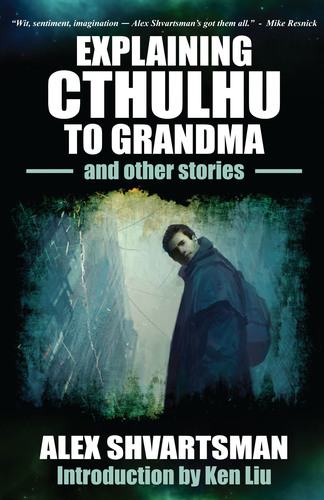
I recently had the pleasure of designing the TOC for my own short story collection, Explaining Cthulhu to Grandma and Other Stories. This is generally a bad idea, because authors are famously poor at judging the quality of their own work. Fortunately, most of the stories in this collection are reprints from pro venues, which means they were vetted by other editors. For this TOC, I took a rollercoaster approach: hopping from humorous to dark, from space opera to urban fantasy, in an effort to emphasize fun and enhance the sense of wonder for the reader. Did I succeed? Can you deduce my reasons for story placement? In a shameless act of self-promotion, I invite you to pick up a copy and find out.


 Posted by Alex Shvartsman






 Alex Shvartsman's Speculative Fiction