The Hook: Flex by Ferrett Steinmetz

March 5, 2015


Flex-144dpi

The Hook:

Julian knew the exact price of everyone’s pants in this nightclub. His own pants were a shabby APO Jeans knockoff ($17), purchased in a muddy alley from a toothless Chinese man, that Julian had hand-stitched with needle and thread ($2) until they’d pass casual inspection.

On any other night, Julian would feel like a fraud in this glamorous world of $275 jackets and $180 jeans – fake it ’til you make it – but he’d smile like he was a rich businessman’s kid, not the son of an $18,000-a-year drycleaner who was dealing coke to pay his tuition ($38,439 per semester). Any other night, he’d be discreetly swapping out his water ($6 a bottle, plus a splashy-generous tip) with a smuggled flask of Popov vodka ($16.99 per gallon), drinking to muffle this horrid idea that maybe – just maybe – being rich was something in the blood, and you could never ever buy success no matter how many deals you cut.

But tonight, he’d snorted Flex. And Julian saw numbers everywhere.

Hot lights flickered over bodybuilders draped in velvet, each flexing into new hypermasculine poses at set intervals – an experimental art exhibit he and Anathema had stumbled into, lured by tumbling streams of statistics. The gallery patrons plucked toothpicked pieces of brie ($1.50 apiece) off of silver trays ($49.95 from Williams-Sonoma). Each tray had wasplike blurs of probabilities hovering over them – the secret knots that tied the future together.

Magic. He had snorted crystallized magic.

Ferrett Steinmetz writes:

The truth is, I hate prologues.

But the structure of my book demanded one, alas. The magic system in Flex is a fairly complex one, and the whole thing that drives the first half of the book is that my protagonist Paul doesn’t understand magic very well. Alas, I needed an introductory sequence that showed how magic works, and more importantly how magical drugs work, to some ordinary schmuck who – spoilers! – does not survive his encounter with them.

Yet if I had to make a prologue, I reasoned, then I would make it the hookiest damn opening I could. You can’t see it here on this web page, but I rigged the manuscript I sent out to agents so that “Magic. He had snorted crystallized magic” was the last line on the first page.

The last line? Aren’t hooks supposed to come up-front?

Well, up-front-ish.

Trick is, like any good fisherman, you have to set the hook deep so they don’t wriggle away.

See, when I started writing, I would have thought a starter sentence like “Magic. He had snorted crystallized magic” would have been a strong start. But it isn’t. It grabs your attention, sure, but it’s a candy attention, a quick rush of sugar that fades too fast. The nourishing meat and vegetables of any novel consists of a heaping tray of who is snorting this crystallized magic, why they’re doing it, and what unwise decisions they are about to make as a result of this inciting incident.

But a fatal prologue makes that introduction more complicated, giving you an intrinsic struggle: You want to make the first person your reader meets sympathetic, but so obviously flawed that there’s a subliminal undertone of don’t stick around too long. The danger here is in getting your reader so attached to the first person they see that they lose interest once you kill them off, and hence put the book down.

So what I needed was to convey the desperation of a kid who was in a fix, and out of his depth. I knew he was in a fancy nightclub. I knew he was miserable. So what would make you experience this club as Julian saw it?

When I’m trying to get into character, I put a character in a situation and then ask: what thing about this setting is something nobody else but this character could possibly notice? That detail is not only a significant window into how a character thinks, but it’s also often a good initial hook – as when a character fixates on an odd detail, the reader tends to go along with them.

In this case, I realized that a poor kid fronting his ass off in a rich nightclub would know money. Nobody knows costs better than poor people trying to pass above their paygrade. And so the opening sentence of “Julian knew the exact price of everybody’s pants in this nightclub” was born.

The trick of putting the prices in was a really low-weight way of adding detail. It’s almost subliminal, as your eyes tend to skip over prices, but it’s also a way of mirroring Julian’s thoughts. Early readers (particularly E. Catherine Tobler, a fine writer in her own right) wanted me to emphasize the dollars, adding more of them for every proper noun, which worked.

So that was, uh, the first paragraph.

The second paragraph was where I had to build sympathy quickly. One of the things any fiction writer has to answer, and answer quickly, is “Why should I care?” Sure, Julian sees prices in everything, but unless we root that in some good reason for people to have sympathy for him, then that becomes a meaningless quirk. So I churned out some backstory quickly, to establish why he’s poor and desperate, and a pretty poor coke dealer. And right at the end of the second paragraph comes that cue that little Julian isn’t going to end so well – he’s convinced that maybe he’ll never be happy, and in fact he’s absolutely correct.

And from there, I could do a bit of descriptive scenework as the bridge to that more important punch.

Five paragraphs. The hook’s at the end of the fifth, and every good writing book will tell you to start off with the strongest start you can.

But the trick is not getting the reader’s attention. It’s getting them to care, as quickly as possible. And once you’ve maneuvered your poor reader into place long enough that they have stakes in who this person is and what they’re doing…

then you reel them in.

Buy Flex on Amazon

About the author:

Ferrett Steinmetz’s debut urban fantasy FLEX, described as “A desperate father will do anything to heal his daughter in a novel where Breaking Bad meets Jim Butcher’s The Dresden Files,” is out in bookstores. It features a bureaucracy-obsessed magician who is in love with the DMV, a goth videogamemancer who tries not to go all Grand Theft Auto on people, and one of the weirder magic systems yet devised. Ferrett, a prolific short story writer, has been as nominated for the Nebula and the WSFA, Tweeters at @ferretthimself, and blogs entirely too much about puns, politics, and polyamory at www.theferrett.com.

###

#SFWAPro

If you’re an author with a book coming out soon and you wish to participate on The Hook, please read this.


The Hook: The Dead Hamlets by Peter Roman

February 25, 2015
 
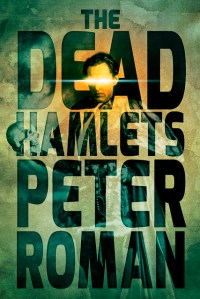
The Dead Hamlets
The Hook:

I lost the angel Baal in Berlin during a rainstorm of biblical scale. Some might say the weather was a sign of things to come, or maybe a sign of things past. But if there was one thing I’d learned over the ages, it was that the weather was usually just the weather. Usually. So instead of killing Baal and getting drunk on his heavenly grace, I found a bar on a quiet street and got drunk on regular spirits instead. It wasn’t the same, but I’d learned to make do. 

Make that drunker. I hadn’t been sober in months, not since the Barcelona Incident. The less said about that, the better. Let’s just say if I didn’t have a reason to kill angels before, I had one now.

Peter Roman writes:
The first few paragraphs of a novel are always the most important ones to me as a reader. They’re what’ll hook me or lose me. They tell me what I need to know about the style of the book, the writing level of the author, the genre coordinates — basically the whole works.
That means the first few paragraphs of a novel are also the most important ones to me as a writer. So how did I begin my new novel, The Dead Hamlets? By using the ol’ dark and stormy night intro.

It’s a dangerous game opening a book like that. But it’s the perfect start for a tale that is so strongly connected to the theatre world. The Dead Hamlets is a ghost story of sorts, where the immortal Cross must solve the mystery of who or what is killing the members of the faerie queen’s court. As it turns out, Cross’s search leads him to an ancient and startling secret about the Shakespeare play Hamlet. There’s a long tradition of dark and stormy nights in the theatre — lots of blackouts and thunder sound effects. The first stage directions of Macbeth, for instance, are “Thunder and lightning.” So I was hinting at the subject matter of my book in its opening lines. Shortly after that initial scene, I have Cross stumble into a theatre full of the dead — at which point things really get dark and stormy!

There’s a bit of the noir to this opening, too. Cross often treads the same moral ground as Raymond Chandler’s Philip Marlowe, and he operates in the shadows just as many hard-boiled detective characters do. Cross has seen it all and done it all, thanks to his immortality.

Then there’s the angel Baal, who is mentioned in that first line. Opening with Cross hunting the angel immediately sets the tone for the book and tells us a bit about his character. This is a dark and gritty urban fantasy, populated with dangerous and sometimes unpleasant people. Readers of the first book in the series, The Mona Lisa Sacrifice, will see immediately that Cross is in a grim place mentally as he’s back to hunting angels for their heavenly grace, which he needs to power his supernatural abilities. He loses Baal and then gets drunk (and later beat up), which tells us that he’s still making a mess of his life. Some things never change for Cross.

Plus, there’s that word “Baal.” The very sound of it is dark and foreboding. This is a book where nothing good is going to happen if characters have names like that.Introducing an angel in the very first sentence of the novel also sets up the supernatural nature of this book. Readers won’t be surprised when other crazy creatures show up, such as the real Witches of Macbeth, the eerie Alice from the Alice in Wonderland tales, a demon, a god of the dead — and a very supernatural and very nasty Shakespeare. If you’re down with the angel, then you’ll be fine with everybody else that arrives with weapons drawn.

As for Berlin? It sets the international scope of this book and reinforces the moodiness of the story. Berlin’s not exactly a place with a lot of happy memories and pleasant associations, after all. And I admit it’s a very subtle nod to the Wim Wenders film Wings of Desire, which featured angels hiding out in Berlin. Nick Cave, who has a cameo in the film, would probably feel at home in The Dead Hamlets.The last hook I put in the opening of The Dead Hamlets was the mention of The Barcelona Incident. This kind of lets readers know Cross has a back story and sets up where the book is in the series overall — The Mona Lisa Sacrifice opens and ends on two very different Barcelona incidents, so it’s a rich reference.

There you have it. In a couple of paragraphs I tried to set up the mood and plot of The Dead Hamlets, give an insight into Cross’s state of mind, and describe how the book relates to the first one in the series. Did all these hooks succeed? I suppose the true test of that is if you keep on reading the story. I certainly hope you do, as I’ve got a lot of tales to tell about Cross and his crazy group of friends.
About the author:
Peter Roman is the alter ego of Peter Darbyshire, a Canadian writer. Roman is the author of The Mona Lisa Sacrifice and The Dead Hamlets, while Darbyshire has written the novels The Warhol Gang and Please, which won Canada’s national ReLit Award for best novel. Both of them share an office in Vancouver, where there are no angels. You can follow their adventures at peterdarbyshire.com
#SFWAPro
###
If you’re an author with a book coming out soon and you wish to participate on The Hook, please read this.

Introducing: The Hook

February 25, 2015

The Hook is a guest post feature on this blog that will help promote other authors’ latest science fiction and fantasy books. Optimally each of these will be posted on the book’s release date.

Each post will open with a very short (up to 200 words) quote form the opening of the novel, followed by the author’s brief post consisting of two parts:

1) Elevator pitch — A paragraph or so talking about the book; what is it about, why is it awesome, etc.

2) The Hook — The author will explain why you they chose that specific scene/those specific lines as the opener. What makes it a great hook that will stick with the readers, and what makes it the right place to begin their story?

It is my belief that such posts will be both interesting to the readers and instructive to fellow writers.

I already have a number of authors lined up and will reach out directly to others on my radar whose books I’d like to bring to attention of this blog’s readers.  If you are an author who would like to participate, please have your publicist contact me. Self-published books will occasionally be featured, but those slots will be available by invitation only.

#SFWAPro


Audio book of “Explaining Cthulhu to Grandma and Other Stories” is live at Audible

February 20, 2015

cover-hi-res

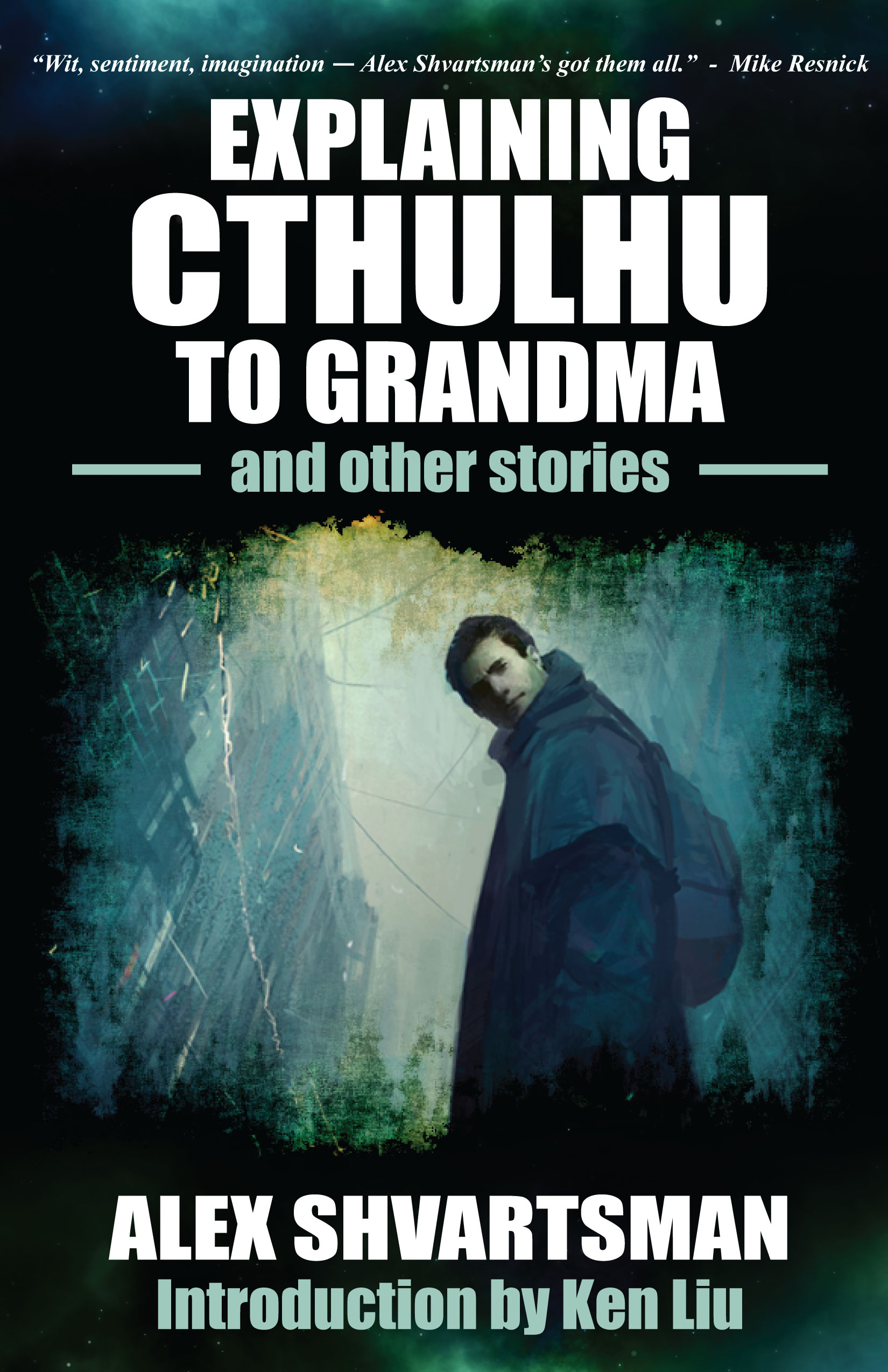
It took them some extra time to approve the book, but it is now live! I’m tremendously excited about Tina Connolly’s narration, and really hope everyone at least checks out the free sampler.

Click here to buy the audio book

Click here to listen to “Explaining Cthulhu to Grandma,” the title story, for free.

#SFWAPro


UFO4 Cover Reveal, Submission Guidelines, Headliners

February 13, 2015

At long last, here’s the info about UFO4:

image description

The cover is by Tomasz Marosnki (the same artist who drew the UFO3 cover.)

Unlike the previous volumes, UFO4 will be themed. The theme of this anthology is: dark humor.

As with previous UFO volumes, this book will feature 2 reprints and all-original material for the rest. The headliners are attached to the project are listed below:

George R.R. Martin – “The Monkey Treatment” reprint

Neil Gaiman – “We Can Get Them For You Wholesale” reprint

Esther Friesner – “The Match Game”

Piers Anthony – “Hello Hotel”

Other headliners that have agreed to write original stories for this volume include:

Mike Resnick – Gini Koch – Tim Pratt – Jody Lynn Nye – Karen Haber

Submission guidelines are now posted. We’ve raised our pay rate to $0.07 per word for original fiction.

There will be a Kickstarter campaign launched sometime in early March. As with previous volumes, the book will be published regardless of the crowdfunding campaign’s success. However, a successful campaign will allow us to purchase more stories, include interior illustrations and otherwise maintain and improve the annual series.

Some of the notable changes from previous volumes:

* Themed volume (see above)

* Maximum story length is 5000 words.

* One submission per author.

Hope to see many great stories from all of you!

#SFWAPro


Podcast: “Explaining Cthulhu to Grandma”

February 6, 2015

You can now listen to the title story of the collection here:

Explaining Cthulhu to Grandma and Other Stories

If you enjoy Tina’s narration (and there’s no good reason why you won’t) you can pick up the audio book containing all 40 stories at Audible, forthcoming in the next few weeks.

#SFWAPro


Book Birthday!

February 2, 2015

Today is the day! No, I don’t mean Super Bowl (or, as I prefer to think of it, Superb Owl.) Rather, today is the day my short story collection is officially released. Many writers affectionately call it book birthday.

cover-hi-res


[Buy direct: Paperback | E-book]
[Amazon]
[B&N] [Smashwords] [Kobo]

If you already have the book (because you received an advance review copy, got it as a Kickstarter backer, or are a time traveler) you would be doing me a huge favor if you post an honest review on your favorite book-buying web site (and especially Amazon, which uses an algorithm that accounts for the number of reviews each book has in their marketing of the title.)

Over the last week I’ve been working feverishly on typing up interviews, guest blog posts and arranging things like giveaways and podcasts, all meant to launch around the same time as the book releases. So rather than inundate you with each of these individually, here’s the collection of links for all of this various promotional stuff in one neat bow-tied package:

Giveaway at SF Signal: Enter for a chance to win one of two signed paperback copies of the collection.

Giveaway at GoodReads: Another opportunity to win a signed copy of the collection.

Interview at A.C. Wise’s blog

Interview at David Walton’s blog

Interview at Darusha Wehm‘s blog (forthcoming tomorrow)

Listen to Icarus Falls podcasted at Toasted Cake: This is probably my strongest story published last year. If you haven’t read or heard it yet, I strongly encourage you to.

Listen to Requiem for a Druid podcasted at Far-Fetched Fables (forthcoming later this week)

The Art and Science of Anthology Editing – a long, detailed guest post at Locus Online. If you are interested in editing an anthology, or just want to know how the sausage is made, you might find this interesting.

There’s more to come in the next few days, including the release of the audio book!


Thunderclap!

January 22, 2015

cover-hi-res

The first of the Explaining Cthulhu to Grandma and Other Stories physical copies have began reaching readers this week, and it’s a surreal feeling. I’m beyond excited for the February 1 official release. I’m lining up lots of different promotional things for the book: blog posts, interviews, giveaways, convention appearances and such. But ultimately, I’m just one guy. That’s why my friends’ help on social media has been so huge!

The official release date for the book is February 1st, and I’m trying to organize a Thunderclap to set off on that Sunday morning. What is Thunderclap and how it works, you ask?

Thunderclap is a web app that will synchronize and simultaneously post a message on the willing users’ Twitter, Facebook, and/or Tumblr feeds. It’s free to use and takes less than 10 seconds to join, but there is a catch: like Kickstarter, it won’t fire off unless a minimum amount of people join in. That minimum is 100. So if you don’t mind posting a message about my book’s release on any of those three social media feeds, would you please click below and join in?

https://www.thunderclap.it/projects/21398-explaining-cthulhu-to-grandma

Also, the early reviews for the collection are in, and they’re very positive! So far it has been reviewed by:

Tangent Online

Albedo 1

Fantastica Ficcion (Note: this last one is in Spanish.)

I’m looking forward to more reviews soon, hopefully.

#SFWAPro


Win a signed paperback of Explaining Cthulhu to Grandma & Other Stories!

January 5, 2015

Enter to win FREE. No gimmicks.

#SFWAPro

Goodreads Book Giveaway

Explaining Cthulhu to Grandma and Other Stories by Alex Shvartsman

Explaining Cthulhu to Grandma and Other Stories

by Alex Shvartsman

Giveaway ends January 15, 2015.

See the giveaway details
at Goodreads.

Enter to win


2014 Year In Review

December 31, 2014

This has been an excellent year for me writing-wise. I got nominated (and subsequently won) my first writing award, I wrote some good fiction I was proud of (though not nearly enough of it), and I made a somewhat-decent amount of money from my writing (for a hobby. Definitely not enough money to live on.)

Here are lots and lots of stats, and some conclusions thrown in:

1) I got to the point where I can consistently sell what i write.

I wrote a total of 13 new short stories this year. Of those 13 I already sold 9. (Of the remaining four, two were solicited: one is very likely to be accepted at the anthology I wrote it for, and the other I haven’t sent in yet, as I want to polish it some more.) In fact, of the 13 stories, seven were solicited and I was spared having to shop them around and collect a bunch of rejections in the process.

2) I’m running out of backlog.

There’s only a handful of stories I still have on submission at this point. That’s because while I wrote 13 new stories in 2014, I sold 19 original stories (I also made fourteen reprint sales, and one original sale for a story I translated from Russian.) All of my original sales were to venues paying $0.05+ per word. About a year-and-a-half ago I decided to no longer submit original work to semi-pro venues (with only one or two notable exceptions). I’m happy to say this has not slowed me down. As I hope to spend a lot of writing time on novels in 2015 and do more solicited projects, I expect my submission volume will decrease further.

Which is not to say I’m not submitting. I was no slouch in 2014. In addition to the 34 abovementioned sales, I gathered around 120 rejections! Most of the submissions were for reprints (and in that I include podcast submissions, foreign language magazine submissions, etc.)

3) The money’s getting better.

I earned a total of $1850 from my fiction writing in 2013. I doubled that number for the total of $3755 in 2014. This is nowhere near the quit-your-job money, but that’s not really my goal. Considering this all comes from short fiction sales (this total also includes $600 I got paid for consulting in my capacity as a SF writer) it’s enough to cover the cost of my books, my convention travel, and anything else I spent money on that’s SF-related. I’ll take that.

This total doesn’t include self-publishing income (i.e. money I earned on Amazon etc from my short story sales) nor any money earned by UFO Publishing from the sale of anthologies: this is purely income generated by my creative writing.

4) Editing and publishing continues to be really fun.

I edited two anthologies this year: UFO3 and Dark Expanse. Both have received solid reviews and enjoy reasonably good sales. I also wrote intros and otherwise prepared for publication my very first short story collection, which is only a month away from it’s release date and I’m extremely excited about its release. I have also done some preliminary work on UFO4. You’ll be hearing lots more about it in the spring.

5) What’s ahead.

In addition to UFO4 there’s another anthology project I’m working on. My agent is negotiating with a major publisher for that one. There’s no deal reached yet, and if one is reached the book will likely not hit shelves until 2016, but you will hopefully be hearing more about it in the coming months.

In terms of writing, I am ready to get back to my novel-in-progress and hope to concentrate on it over the coming months. I’ll still produce an occasional short story, because they’re really fun, and I’ll still translate some stuff, but the novel has to take priority or I’ll never get it done.

I will also attend more conventions this year. I already booked my WorldCon and World Fantasy memberships. You will likely find me at Vericon, Fogcon, Balticon, and Capclave this year, and possibly others, too!

So that’s my 2014 writing recap. And as I post it to the blog at 10:30 on New Year’s Eve, my plan is to go back to writing and only stop around midnight. Because they say how you ring in the new year is how that year is going to go for you. Or something like that.

#SFWAPro