Mailing List Activated

July 20, 2016

Writers who are smarter than me (aka writers) keep telling me that I must have a mailing list. Well, fine then. I went ahead and made one.

My plan is to update once or twice a month, but also to provide anyone kind enough to sign up for these updates with some exclusive content: I will send out a free short story or flash fiction every month (from my many previously published pieces for now, but if the list grows popular enough I’ll consider posting something original!) I will also do raffles and share some unique specials through the list. I might even share a few tidbits from my novel-in-progress in the coming months. Which is to say, sign up. Please? With sugar on top?

Click here to sign up.

#SFWAPro


Readercon 2016 Schedule

July 7, 2016

I’ll be spending the next three days in Quincy, MA, attending Readercon 27. Here’s where you’ll be able to find me:

Friday, 2pm, Salon E: Autograph session

Friday, 8:30pm, Salon B: Reading – A selection of urban fantasy humor short stories.

Saturday, 1pm, Salon 5: If Thor Can Hang out with Iron Man, Why Can’t Harry Dresden Use a Computer?
(with Gillian Daniels, Elaine Isaak, Andrea Phillips and E.J. Stevens)
What are the story benefits of setting up magic/nature/religion and technology/industry/science as either conflicting or complimentary? What cultural anxieties are addressed by each choice? How are these elements handled in stories from various cultures and eras?

Sunday, 1pm, Salon 6: Interstellar Empire in a Post-Scarcity World
(with Neil Clarke, John Clute, Robert Killheffer, John O’Neil)
If we had all the resources we needed and weren’t damaging our environment, would we still expand to space given technology that made that easy as well? Would there still be conflict with other interstellar empires? Would we have a responsibility to give this technology to all those we encounter?

#SFWAPro


New publication: “Forty-Seven Dictums of Warfare” at Daily Science Fiction

July 5, 2016

You can read “Forty-Seven Dictums of Warfare” here.

And another flash story, “A Perfect Medium for Unrequited Love” sold to Nature over the weekend. I expect it will run in a few months’ time.

#SFWAPro


New publication: “Future Fragments, Six Seconds Long” at Diabolical Plots

July 1, 2016

My fantasy flash story is now live at Diabolical Plots, free to read here.

This story was originally written for the Art and Words collaborative show, inspired by the art in the poster below. I’m happy it found a good home at Diablolical Plots, edited by David Steffen. Enjoy!

artwords


#SFWAPro


Anthology Update

June 23, 2016

HumanityARC

This has been an especially busy six months for me when it comes to anthology projects. My writing has suffered (though I’m getting back on the horse now that the significant bulk of anthology work is done for the year.) Today shiny print copies of the Advance Reading Copy of HUMANITY 2.0 showed up at my office, and so I thought it might be a good time to update readers on my various anthologies published, in progress, and planned for the future:

Funny Fantasy

FunnyFantasyCover

I began work on this book in late 2015 and it was published this Spring. The turnaround on reprint-only anthologies is really fast. There’s only minor editing; the bulk of the time investment is in selecting the stories. This was a follow-up to the popular Funny Science Fiction antho from last year and it’s doing quite well. If you don’t yet have a copy, grab it here.

Humanity 2.0

Humanity20-400


I’m really excited about this book as it is my first hard SF anthology. I turned the manuscript in to the publisher (Arc Manor/Phoenix Pick) a couple of months ago and the book was copy edited, proofread and laid out. The ARCs (advance reading copies) are being sent out to reviewers as we speak and the book will be published in October.

Unidentified Funny Objects 5

image description

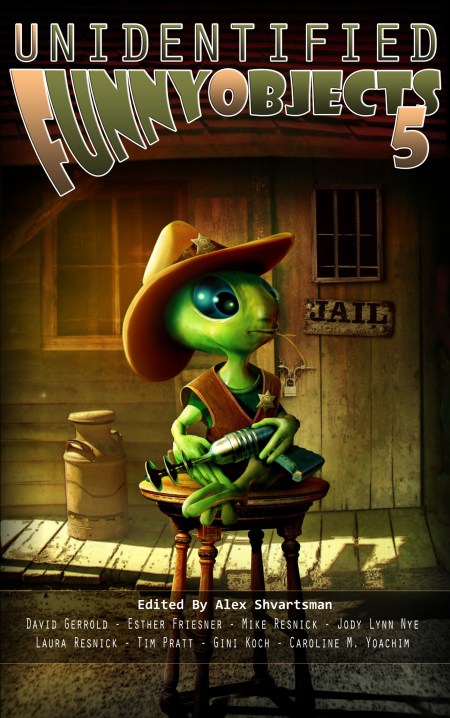
The book is in the very final stages of copy edits, about to be sent out to the layout designer in the next few days. I’m falling a week or two behind schedule on this one, but not severely so (UFO4 was delivered to the designer on June 30 and was published on schedule.) I’m hopefuly we will once again have it in time for a Capclave launch in October.

Funny Horror

This project I’m really behind on. I’m sitting on a number of stories I consider for inclusion, but there’s a lot more reading to do, and I haven’t had the chance to do it yet. My goal is to allocate some time to this in the coming month. I would rather push back the release than publish the book with less than 100% of the stories I really like, so the amount of great content I find will dictate the release date for this one.

Secret Project

I’m weeks if not days away from announcing another anthology project, and I pretty much guarantee both the fans of my writing and fans of my anthology work will dig this one. I can’t say more until the ink is dry on the contract, but as soon as that happens, the announcement will be made! This anthology will likely be released in late 2017 or early 2018.

Funny Science Fiction 2

This is slated for sometime in 2017; I haven’t done much work but I’m sort-of passively collecting great stories. I hope that, by the time I roll up my sleeves on this project for real (likely late this year) I will have a good chunk of the book filled.

Unidentified Funny Objects 6

There will, of course, be more volumes of UFO for as long as I have the health and the financial means to publish them. I’ve done no work on this one at all, as I typically begin inviting headliners and laying out other groundwork once the previous volume is off to the printer. So I will begin contacting headliners later this summer or early autumn.

UFO6 will definitely have an open submission window, while most other projects will be filled by invitation and/or recommendation when it comes to reprints. If you know of a funny story that was published elsewhere and fits the science fiction or horror genres, I’d love to hear about it. If I like it enough, it will make it onto my consideration list and eventually I will solicit FSF2 and FH anthologies from the stories on that list.

#SFWAPro


The Hook: Waypoint Kangaroo by Curtis C. Chen

June 21, 2016

waypoint

The Hook:

My left eye doesn’t lie. The scanning implants and heads-up display can only show me what’s really there, and right now they’re showing me a border guard carrying too many weapons. Standard-issue assault rifle hanging around his neck, but also a machine pistol under his armpit, a revolver strapped to his left ankle, and a high-voltage stunner in a tail holster at the base of his spine.

I saw suspicious bulges under his coat as I rolled up to the checkpoint, and he obviously wasn’t happy to see me, so I activated my eye scanners. Now I can read the factory bar code off each weapon and look up the manufacturer’s specs via satellite link. The stunner surprises me—it was manufactured off-world, somewhere in the asteroid belt, and delivers more energy than is legal anywhere on Earth. And the concealed firearms are Hungarian-made, military issue. Not the kind of thing Kazakh border police pick up at the corner shop.

But it’s not the guns that really put me wise to Fakey Impostorov. I can also see into his body, and simple checkpoint guards don’t have an unmistakable spiderweb of ground-to-orbit comsat antenna surgically implanted in their left shoulder. If this guy’s not a field agent for a national intelligence outfit—a spy like me—I’ll eat my shoe. And shoes taste terrible. Trust me, I know. Long story.

Anyway, what is a Hungarian secret agent doing on the Russia–Kazakhstan border?

Curtis C. Chen writes:

My debut novel Waypoint Kangaroo is a science fiction spy thriller that combines elements from three of my favorite fiction genres: espionage tales in the vein of John le Carré, space adventures such as Star Trek, and superhero comics like Wonder Woman (preferably as written by Gail Simone or Greg Rucka).

Since I was mashing up so many disparate things, I wanted to make sure the start of the book clearly established the setting and the rules of the world. I revised the first few chapters many times over the many years of working on this novel. The first draft started with a James-Bond-movie-style “cold open,” which I removed in a later draft, then put back, then changed a lot more before it really worked.

In addition to world-building, I wanted the cold open to properly introduce readers to my main character, Kangaroo. The action in the first chapter leans on some straight-up spy-fi tropes; just like every 007 film, the novel starts with Kangaroo finishing up one mission and making a narrow escape before returning home. But Kangaroo isn’t a typical spy, and readers need to know what they’re getting into, both with his unique superpower–”the pocket”–and his snarky personality.

At some point, I realized that the cold open was in many ways a thematic microcosm of the whole book: the problems that Kangaroo is dealing with, how he chooses to confront those problems (or not), and how he feels about everything that’s happening. It’s all laid out in that first scene. This became a great touchstone for me during the revision process, especially when I needed to completely rewrite certain scenes while staying true to the character… but that’s another story, which I can’t tell until later BECAUSE SPOILERS.

Buy Waypoint Kangaroo on Amazon

About the Author:

Once a software engineer in Silicon Valley, CURTIS C. CHEN now writes speculative fiction and runs puzzle games near Portland, Oregon. His debut novel WAYPOINT KANGAROO, a science fiction spy thriller, is forthcoming from Thomas Dunne Books on June 21st, 2016.

Curtis’ short stories have appeared in Daily Science Fiction, the Baen anthology MISSION: TOMORROW, and THE 2016 YOUNG EXPLORER’S ADVENTURE GUIDE. He is a graduate of the Clarion West and Viable Paradise writers’ workshops.

You can find Curtis at Puzzled Pint Portland on the second Tuesday of most months. Visit him online at: http://curtiscchen.com

###

#SFWAPro
If you’re an author with a book coming out soon and you wish to participate on The Hook, please read this.


Balticon 50 (2016) Schedule

May 25, 2016

You can find me in Baltimore over the four-day Memorial Day weekend, attending Balticon 50 along with such luminaries as George R. R. Martin, Peter S. Beagle, John Varley and many more. I will spend most of the time in the dealer room, manning the UFO Publishing vending table. However, I’m also participating on several programming items. Here they are:

Friday, 9pm – St. George – Urban Fantasy Reading

I’ll read alongside Val Griswold-Ford, John Hartness, and S.L. Wideman. I’ll read “Dreidel of Dread: The Very Cthulhu Channukah” and maybe something else, time permitting.

Saturday, 9am – Parlor 11029 – The Business of Short Fiction

We’ll discuss researching short fiction markets, preparing manuscript for submission, cover letters, communication with editors, contract review and negotiation, reprint rights and markets, foreign rights, and other aspects of monetizing your short stories.  Advance registration is required for this seminar and attendance is limited.

Saturday, 5pm – Autograph Table 1 – Signing

Signing books with Sarah Pinsker and Michael Underwood.

Monday, 10am – Kent – Mass Signing

Lots of authors signing at the same time.

Monday, 11am – Parlor 8029 – How to Give and Get Critiques

With Sarah Pinsker (M), Scott Edelman, Connie Willis and K. M. Szpara

What goes into being a good critiquer. How to listen to others’ critiques of your work. Where to find critique partners, online and in person.

Monday, 12pm – Parlor 8029 – What’s Hot Short Fiction?

With Sarah Pinsker (M), Mike Underwood, Jean Marie Ward, Scott Edelman

#SFWAPro


How to Write a Proper Short Story Cover Letter

May 9, 2016

As an editor I see a lot of bad cover letters. I can’t help but think folks are following some bad advice out there, so I wrote a thing that might help. It’s long and it’s a little ranty and cranky (because I’ve seen a lot of bad cover letters in the last month), but I hope it will also be helpful.

Note that this advice is specific to genre magazines and anthologies and short fiction. Novel submissions play by a different set of rules, and there may be a slightly different etiquette in literary submissions and other genres. But, if you write and submit science fiction, fantasy, and horror short stories, the following essay is for you.

How to Write a Proper Short Story Cover Letter

The most important fact to remember about cover letters is this: the best cover letter in the world is not really going to help you sell your story.

An impressive list of awards and pro credits might–on a rare occasion–entice a slush reader who’s already on the fence about a submission to bump it up to the editor. An editor or first reader might delve a little deeper into the story before they give up because your previously listed sales have demonstrated a certain level of competency. But, beyond that, the story is going to sink or swim on its own.

However, a bad cover letter is at least as likely–perhaps more likely–to undermine your chances. It can clue in the editor that you’re new and inexperienced or, worse yet, that you’ve settled for being published in mediocre markets. (More on that below.) And if you manage to really put a foot in your mouth, you may end up with whoever is reading the story actively rooting against you.

The cases where the cover letter will sway things either way are rare. Some of the industry’s top editors wisely ignore cover letters altogether; they read the story first so whatever you put in the cover letter doesn’t pre-bias them either way. But not all editors do that. And since a good cover letter is really easy to write, why not give yourself that tiniest extra edge?

Let’s begin by talking about some of the most common mistakes one finds in cover letters. I write this at the tail end of a month-long submission window where my associate editors and I received nearly 640 submissions. Although the letter below is 100% fake, virtually every mistake and problem it features showed up in one or more of the cover letters I saw this month alone.

Without further ado, here’s a terrible cover letter:

Clueless Writer
123 Main Street
Cleveland, OH 44101
216-555-1212
c.writer@email.com

Attn: Mrs. Jane Smith, Editor

Dear Mrs. Smith,

I’m submitting my short story “Traveling Back in Time to Kill Hitler” to be considered for publication in your magazine, Time Travel Tales. It is formatted in Standard Manuscript Format and saved as an RTF file as per your guidelines. It is an original story not previously published anywhere and it is not on submission elsewhere.

This story is about a pair of scientists who invented a time machine and decided to to travel back to 1905 and kill young Hitler while he’s trying to make it as an artist in Vienna. They wrestle with the moral dilemma of killing a man before he committed any crimes as well as with the potential pitfalls of a scientific paradox his death would cause. In a surprise twist ending, they decide not to kill Hitler and go home.

I am a graduate of DeVry University where I earned my MFA. I then studied physics at Phoenix University Online and earned a PhD. My thesis was on time travel paradoxes. I’m also a Taekwondo black belt, and an award-winning cat breeder.

I’ve been previously published in For the Luv Review, Cat Breeder Quarterly, Obscure magazine, The Poetry Digest, Daily Movie Reviews website, and the comments section of the Cleveland Times.

This manuscript is a disposable copy.

Sincerely,

Clueless Writer

Let us now examine this bit by bit:

Clueless Writer
123 Main Street
Cleveland, OH 44101
216-555-1212
c.writer@gmail.com

Attn: Mrs. Jane Smith, Editor

1985 called and it wants its business correspondence formatting back. Your contact information should appear at the top of your manuscript, and while there are still a small handful of markets that ask you to include it in the cover letter as well, most don’t. Unless they specifically ask for it, don’t duplicate it in the cover letter, and certainly don’t include “Attn:” or “From the desk of” lines they may have taught you about in eleventh grade typewriter class. The first line of your cover letter should be the salutation.

Dear Mrs. Smith

At the very least, this should be addressed to Ms. Smith because she’s the editor and not merely an extension of her husband. If you know who the editors are, generally address the most senior editor at the market. Dear Ms. Smith or Dear Jane Smith would do nicely. But, really, Dear Editor(s) will do just as well. You could even go with my personal favorite (and a form of address I’ve actually seen in my slush pile): Gentlebeings. If you use any of these, you avoid the possibility of misgendering your correspondent, misspelling their name (Shvartsman here; I know a thing or two about that), and maybe sidestep the effort of trying to decipher the hierarchy of a specific market.

Most editors won’t care, but unless you’ve communicated with the editor in the past and they signed their e-mail to you with their first name, it’s marginally better to avoid addressing them by their first name (aka Dear Jane.) For the record though, “Dear Alex” is fine by me.

Moving on:

I’m submitting my short story “Traveling Back in Time to Kill Hitler” to be considered for publication in your magazine Time Travel Tales. It is formatted in Standard Manuscript Format and saved as an RTF file as per your guidelines. It is an original story not previously published anywhere and it is not on submission elsewhere.

The same rule applies to cover letter as does to fiction: don’t overwrite. Before you include any specific bit of information, ask yourself: is this necessary and relevant?

Jane Smith knows that the name of her magazine is Time Travel Tales. She can reasonably make an assumption that you’re sending the story to be reviewed for publication there. If Time Travel Tales asks that you format your story in SMF (Standard Manuscript Format) and does not accept reprints or simultaneous submissions, then she will assume your story is neither a reprint nor a simultaneous submission, because you’re a human being who is capable of reading and processing information stated in her guidelines.

Which brings us to my personal favorite: writers letting me know that they formatted the manuscript in RTF or DOC or whatever, as specified in the guidelines. First, again, I know which formats are requested in my own guidelines. And second, I can see your file right there. Either you formatted it correctly, in which case I don’t need a reminder as I will not be awarding you a gold star for this since we aren’t in kindergarten, or you sent me a PDF, ZIP file or some other strange beast I didn’t ask for, and then we have a different problem altogether.

This story is about

If you follow any advice at all from this text, let this be it: Do not summarize your story in your cover letter. Let me repeat that.

Do not.

Summarize.

Your Story.

In your cover letter.

This practice likely comes from the world of novel query letters where you do have to summarize your book in a few paragraphs. However, this need does not translate to short fiction. Virtually every editor I know hates when authors do this with a passion.

We want your story to speak for itself. We don’t want any sort of a preview, a summary, or anything else that will spoil it in some way. In fact, when I see a sentence that opens with “This story is about” I immediately skip to the next paragraph. So please, do yourself a favor and don’t include one.

Once in awhile, a market will actually ask you to include a summary. And while I don’t really get how this is helpful to them, always abide by what the guidelines say over what I write here.

Having said this, it can occasionally be helpful to include the story’s genre and length, especially for markets that review different genres. It may help the editor assign it to the right reader or to budget proper amount time to review it themselves. So it’s perfectly okay to say “Please consider my dark fantasy story” or “Enclosed is a steampunk flash fiction story of 900 words.) Just don’t get into the details of plot and sure as hell don’t tell the editor how wonderful and great your story is.

There’s one other notable exception to talking about your story in the cover letter, and we’ll cover it in the next section. Or, perhaps you can spot it in the next paragraph yourself.

I am a graduate of DeVry University where I earned my MFA. I then studied physics at Phoenix University Online and earned a PhD. My thesis was on time travel paradoxes. I’m also a Taekwondo black belt, and an award-winning cat breeder.

Generally, you should not include your non-writing related accomplishments in the cover letter unless your experience directly correlates to what the story is about. In our example, the author is absolutely right to mention their physics background and their thesis. It is directly relevant to the story they are submitting and to Time Travel Tales as a market. The other tidbits, however, should not be included unless the author is presenting a story about a Taekwondo tournament or about breeding cats.

So yeah, if you’re a NASA scientist mention that in your space exploration story. If you’re a history professor, this will be relevant if you’re writing historical fantasy. If you write a story set in Japan and you have lived in Japan for a few years, you can mention that. But your advanced degree in Windchime Studies is likely not helpful when trying to sell a cyberpunk story.

Then there’s my personal pet peeve, and that’s authors mentioning their MFA (a creative writing degree) in their cover letters. To me, this is an equivalent of saying “trust me, I write good” and is not relevant to your story, unless it happens to be about an MFA program. In fact, seeing this in a cover letter almost always correlates to something I can quit reading after a page because the writing is subpar.

Which is not to say MFAs are bad, or writers with MFAs are bad. It’s just that the good writers with MFAs do not generally feel the need to include this particular accomplishment in their cover letters.

The other thing that is perfectly okay (but unnecessary) to include are your professional writing association memberships: SFWA, HWA, and the like. Instead, focus on including your publishing credits and awards or achievements in creative writing, if any.

I’ve been previously published in For the Luv Review, Cat Breeder Quarterly, Obscure magazine, The Poetry Digest, Daily Movie Reviews website, and the comments section of the Cleveland Times.

First of all, let me say that listing no publishing credits if you don’t have them will never hurt you. It’s even okay to say you’re a new/unpublished writer. Really! Every editor I know loves discovering new talent and loves being the first to publish someone, or first to publish someone in a pro venue. No one is going to hold a lack of past credits against you.

It’s also perfectly fine if you’re new and you only have a couple of token credits to your name. Although I advise authors not to submit anywhere that pays less than semi-pro rates, that’s a different topic and a couple of token credits won’t hurt you. There are two things that can hurt you, however:

First, listing a ton of credits that are all lower on the totem pole than the place you’re submitting to. When a pro editor sees a list of twenty non-paying or token-paying markets they won’t be impressed. In fact, this will have the opposite effect as the editor might assume that you either can’t write work publishable at better venues or, worse yet, you’ve settled for the minor leagues and aren’t seriously trying to improve your writing. Either way, you’ve just pre-biased the editor/first reader against your work. So, even if you have 20+ small credits, only list three or four of them.

In fact, even if you have 20+ professional credits, only list three or four of them anyway. Name-dropping your top 3 markets is better for establishing your bona fides than name-dropping your top 10 markets.

The second way to torpedo your chances is to mix in your non-fiction credits with your fiction credits to make the overall list more impressive. It’s cool if you wrote an article for Clarkesworld, had a poem published in Strange Horizons or a book review at Apex magazine. You can even include those credits in your cover letter if you really want to. But if the editor thinks you’re intentionally trying to obfuscate things by bundling them with your actual fiction credits with statements like “I’ve been published at For-the-Luv Review, Obscure magazine, and Clarkesworld” they will notice that one of these things is not like the others, use their Google-fu, and then they will raise an eyebrow.

This manuscript is a disposable copy.

This is a thing I actually saw in a cover letter this year.

Back in the days when dinosaurs roamed the Earth and the price of return postage for a stack of typewritten pages was cheaper than the cost of photo-copying an extra set, some authors wanted their rejected manuscripts back. Magazines required that these authors include a SASE (self-addressed stamped envelope) either way, and enough postage if you wanted your precious pages back (coffee stains optional.) If you didn’t want them back, it was expected to mention in the cover letter that the manuscript copy you included was disposable. In fact, I remember doing this as recently as a couple of years ago, until F&SF became the last of the respectable genre ‘zines to stop requiring print submissions.

Fast forward to today. All submissions are electronic. (Some venues still accept print subs, but if you’re reading this, you probably aren’t among the authors who avail themselves of this option.) So, what is the point of adding this line to the cover letter? None, other than blindly following conventions from the bygone era.

To summarize, your cover letter should be short.

In e-mail cover letters include story title, genre (if applicable), length, and any relevant credits/awards. Consider including word count in email header as this may be helpful to the editors as they often choose to read stories based on how much free time they have available.

In webform that already makes you fill in the basic info, stick to credits/relevant info; no need to repeat info from the form’s fields.

Optimal cover letter for Clueless Writer submitting to Time Travel Tales would be:

Dear Editor,

Please consider “Traveling Back in Time to Kill Hitler” (SF, 3000 words).

My short fiction has appeared in For the Luv review and Obscure magazine.

I have a physics PhD from Phoenix University Online. My thesis was on time travel paradoxes.

Thank you.

Sincerely,

Clueless Writer
ClulessWriter’sHomepageURL.com

It’s simple, it’s basic, and it highlights the relevant accomplishments this writer has.

This is the actual cover letter I currently use:

Dear Editor Name,

Please consider Story Title (SF, 2000 words).

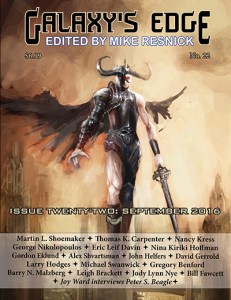
I’m the winner of the 2014 WSFA Small Press Award for Short Fiction and a finalist for the 2015 Canopus Award for Excellence in Interstellar Writing. Over 80 of my short stories have appeared in Nature, Galaxy’s Edge, Intergalactic Medicine Show, and other venues.

Thanks very much in advance for your consideration.

Sincerely,

Alex
www.alexshvartsman.com

If anything, I feel like mine is on the longish side. Note the URL at the end of the letter. If they really care about my other credits or just want to make sure I’m not unhinged lunatic who writes 3000-word rants about cover letters on his blog (Ahem!), they can click through. But, chances are, they won’t. Because this cover letter has, hopefully, done its job of introducing me briefly and will not get in the way of the story.

Which is, really, all you can ask of an optimal cover letter.
#SFWAPro

###

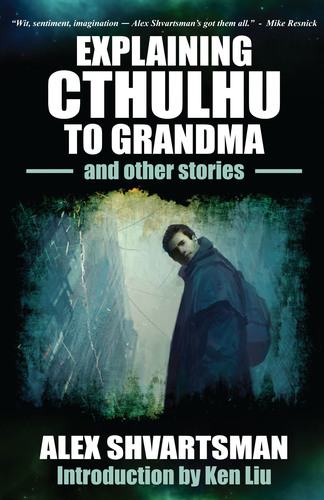
If you found this post useful, please consider checking out some of my fiction, such as Explaining Cthulhu to Grandma or Eridani’s Crown.


Humanity 2.0 TOC and Cover

April 24, 2016

This has been posted at SF Signal first, but I’m going to share it here in case you missed it:


Humanity 2.0 is an anthology of science fiction stories that examine how interstellar travel might change us as a species. Will we choose to upload our minds into a singularity? Enhance ourselves with alien DNA? Will our bodies remain the same, but our culture and societal norms change considerably to accommodate for effects of time dilation, or become subsumed by advanced alien species? What will it mean to be human in such a future?

Edited by Alex Shvartsman, this book includes fifteen stories (9 original and 6 reprints) totaling about 85,000 words, introduction by Alex Shvartsman, and cover by Holly Heisey.

Humanity 2.0 will be published by Arc Manor/Phoenix Pick in October 2016.

Here’s the table of contents…

  1. “The Waves” by Ken Liu
  2. “Justice and Shadow” by Angus McIntyre
  3. “Nexus” by Nancy Fulda
  4. “A Lack of Congenial Solutions” by Kenneth Schneyer
  5. “Green Girl Blues” by Martin L. Shoemaker
  6. “Mindjack” by Jody Lynn Nye
  7. “Picnic on Nearside” by John Varley
  8. “An Endless Series of Doors” by David Walton
  9. “Angry Rose’s Lament” by Cat Rambo
  10. “The Right Place to Start a Family” by Caroline M. Yoachim
  11. “The Iron Star” by Robert Silverberg
  12. “E^H” by Alvaro Zinos-Amaro
  13. “The Hand on the Cradle” by Brenda Cooper
  14. “The Homecoming” by Mike Resnick
  15. “Star Light, Star Bright” by Robert J. Sawyer

#SFWAPro


Funny Fantasy Amazon giveaway

April 20, 2016

FunnyFantasyCover

I’m giving away three copies of FUNNY FANTASY e-book on Amazon via their new giveaway platform. It’s free to enter but it does require a Twitter account.

https://giveaway.amazon.com/p/80ceaedc85cfc648?ref_=pe_1771210_134854370#ln-fo

#SFWAPro