Fair and Square

February 13, 2014

dog

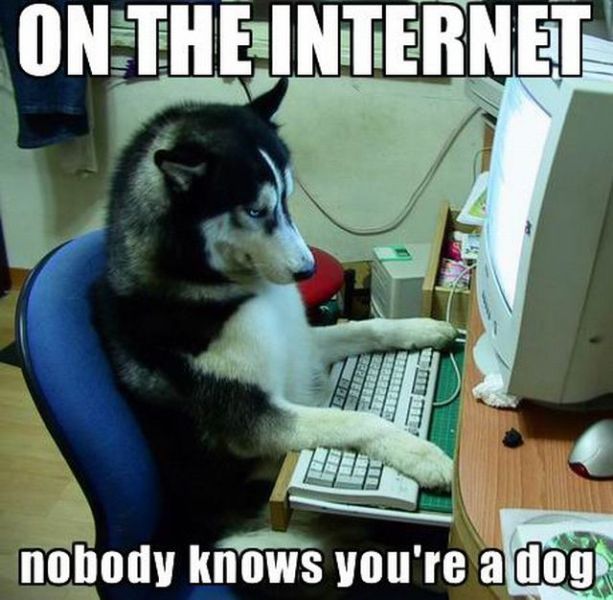
On the Internet, nobody knows you’re an underdog.

It has been a crazy 36 hours for me.  I wrote a blog post about my poor experience with Square yesterday morning, and shared it on my Twitter and Facebook accounts. It got shared and retweeted a handful of times by my friends, and even a few strangers, which was pretty much the life cycle I expected of it.  But then, it kept getting shared by more and more people, until my Twitter Interactions feed was updating literally every few seconds.  The story got picked up by Hacker News, then reposted by Valleywag/Gawker. Since then it has also appeared in Business Insider and other media outlets. My inbox is inundated with requests for comment or permission-to-repost from various online media sites.

Tons of people wrote to me or posted  in the comments. Their responses ranged from sharing their own bad experiences with the credit card processing industry at large, to suggesting services and credit card processors they are happy with, to great advice about steps my store can take to prevent fraudulent transactions in the future.  In all, over 28,000 people read the original post so far, and that’s not counting the versions up on Valleywag and elsewhere.

As I tried to work while watching this thing explode on the Internet yesterday, I couldn’t help but wonder if it would prompt a direct response from Square. And it did.

Just before 5pm, a gentleman from Square Customer Support team called me at the store. We spoke for about ten minutes. The conversation did not go well.

First of all, he informed me that Square did, indeed, attempt to fight the chargebacks on my behalf, but that they lost those cases. I was told that they were going to inform me of this via e-mail “soon,” but since I expressed a strong desire to learn the fate of these transactions on Twitter, I was being given a more immediate update by phone.

Losing the chargebacks does suck, but I could accept that, if all the other parts of this scenario had played out differently. My real issue was with the lack of communication, which I expressed to him, and he acknowledged that they could have done better in that regard, and are working on improving that aspect of their business.

Then the conversation got around to the cancellation of the store’s account. He started off by explaining that collectibles are a high-risk sort of item with lots of fraud potential, and that they planned on disallowing the sale of this type of item via Square e-commerce portal in the future. Which is interesting, because how exactly do you define a collectible, and who is going to evaluate listings and enforce this policy? According to Wikipedia, the only type of  items Square currently disallows to be sold using their service are firearms.

Then he offered to provide me with some “helpful information on how to detect/avoid fraudulent online transactions in the future”. Umm, OK.

Look, Square, if you possess such valuable and useful information then perhaps it might be a good idea to just make it available on your web site for all your merchants to peruse. You know, for the sake of humanity?

But it was the next thing he said that floored me.  He told me that, while my store wouldn’t be able to continue to accept Square payments online, they would allow us to use the Square reader device in-store and for other in-person transactions.

Really, Square? Really? Isn’t it a little like breaking up with someone over text message, and then magnanimously suggesting that you’d be willing to still be friends with them?

I could have had a field day with this suggestion, but I didn’t. After all, it wasn’t this poor guy’s fault. He drew the short straw of delivering bad news to an already irate customer. He had no actual good news to offer me, and he knew it. So, instead of taking out my frustration on him, I explained as calmly as I could manage the ways in which their decision to cancel my account without notice screwed over my business, and how all of this could have been avoided with a simple “Hey, we’re sorry, but we aren’t comfortable processing your transactions. Why don’t you go ahead and take a week or two to set up a replacement, so you don’t lose a metric ton of business while the e-commerce site you’ve been advertising to all your customers for a year is suddenly taken down.”

Once again, he acknowledged that they could have handled all of this better. Then I thanked him for the call, and got off the phone.

Shortly after I got home form work, one of my employees called to let me know that someone else from Square had tried to reach me. This gentleman left a toll-free number and a twelve-digit pin code, and asked that I call him back. He said that he would also leave a note with an operator to forward my call, in case the pin didn’t work (I guess this happens often enough to warrant the backup plan.) I immediately tried to call him back, and, sure enough, the pin didn’t work.

Their toll-free number gives you three chances to input the pin. If you enter an invalid pin three times, it hangs up on you. I’ve tried pressing zero, and pound, and thinking positive thoughts at it, but there was no way to reach an operator.

Now that I had a name of the person who actually wanted to talk to me at Square, I wasn’t about to give up easily. I tweeted at their account, in case whoever was manning it would get the message across. I e-mailed them through the web form. I also Googled their company and, after a few minutes of searching, found their corporate phone number. When I called it, it asked me to enter the extension of the person I was trying to reach. Once again, I found no way to get to a live operator.

I was beginning to suspect that I was either trapped in an absurdist science fiction story, or these guys really didn’t like telemarketers. Or both.

My frustration was greatly tempered by an amazing outpouring of support from the online community. People kept spreading the story. They offered emotional support as well as information and advice on how to proceed. I spoke to several competent web designers about setting up a more traditional shopping cart. Several companies offered their services for processing online transactions. Shopify generously offered to waive six months worth of fees at their Unlimited account level (that’s almost $1000), if I wanted to try their service. I spoke to a very nice Market Development manager at PayPal in New York, who asked what they can do to help my business, and then set up an  appointment to come to see my store in person the next day. And, being an eternal optimist, I still hoped that this second phone call from Square would eventually bring better news.

It felt like the entire Internet briefly forgot how to argue and troll, and just decided to be nice to me. I went to bed exhausted by the events of this day, but in a much better mood.

In the morning I woke up and checked my email. The subject of one of them read:

Square has sent you $2,280.78

Square has initiated a wire transfer to our bank account of, what I assume, is a full amount of disputed transactions less their standard 2.75% fee.

At this point, I don’t know if they managed to convince the credit card companies to cover these chargebacks after all, or if they decided to pay it out of their own pocket. I still haven’t managed to speak to that second person from Square (although I did finally get an e-mail from him late this evening, asking for a number where I can be reached tomorrow, so this conversation is likely going to take place.) The fact of the matter is that they did act to address this situation and help my store out of this jam.

There are lots of fascinating ethics problems here. As a self-interested individual, I’m obviously thrilled to have my money back. But is this resolution fair? Should I have expected far less, given how often merchants lose chargeback cases, out there in the real world? Should I have expected more, given the additional loss of business and the fact that our account is still cancelled, not because we did something wrong but due to the cold equations of risk management? And if Square covered the loss, is this fair to them? Or have I leveraged the power of social media to extort a favorable resolution?

My good fortune for the day didn’t end there. I met with a pair of very enthusiastic and kind folks from PayPal, who took the cab from the city all the way to South Brooklyn to visit my store and listen to my story, then set out to see what they could do to help on their end.

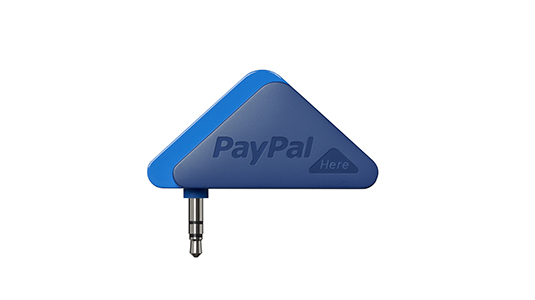
They offered to set up a PayPal-based shopping cart on our site at their cost (a service that would have set me back $500 had I hired a freelance programmer to do it, based on a quote I obtained yesterday), and to also set up a PayPal Here-enabled POS terminal for our in-store transactions. They were genuinely excited to be able to help us grow our business in partnership with them, even if our store is tiny compared to their volume of business. One of them will return next week, to help us set up this terminal and train our staff to use it.

The goal of this follow-up post isn’t to bash Square for their lack of transparency, nor it is to praise them for their quick and decisive action regarding the disputed funds. It isn’t even to shill for Shopify and PayPal, although their willingness to step in and help deserves  to be recognized.

It’s to thank the online community.

If this conundrum happened before the age of social media; if dozens or even hundreds of people didn’t feel this story deserved being shared with their friends and co-workers, if blogs and aggregator sites and online reporters didn’t find my plight compelling enough to cover, I would have never achieved this outcome.

Internet isn’t just a vast repository of baby photos and cat memes. It’s an enormously powerful social engine that can, and often does, empower the little guy. On the Internet, nobody knows you’re an underdog, because with a few clicks of a mouse the netizens can make your voice heard as loudly as that of a major corporation.

So, from the bottom of my heart, thank you. I now return you to the regularly scheduled cat meme.


Screwed by Square

February 11, 2014

squarereader

In addition to making the small bucks as a science fiction writer, I have a day job. I run a game store which hosts events and serves the local community here in Brooklyn, but also sells games and collectibles online and at shows/conventions.

When Square came out with their portable credit card reader, I was very excited to adopt this technology. In exchange for a little under 3% of each transaction, they provided a way to turn my cell phone and my iPad into credit card machines. Portable, convenient, reliable. What’s not to like?

I loved the product. I carried the Square reader with me any time I traveled to events, and used it to complete hundreds of transactions. I told everyone who would listen how it was the best thing since sliced bread.  When the regular credit card terminal at my store broke down, I used Square while waiting for a replacement terminal to arrive.

“Wouldn’t it be great,” I mused, “if Square added a way to accept credit cards online, so I could use them for e-commerce, too.” And, sure enough, they did. It was easy to use, and I eagerly set up their service as the way to process all orders on my store’s web site. This was in July of 2013, and for a few months everything was good. Then the trouble began.

In November 2013, someone used stolen credit card numbers to place several large orders on my site.  Before I or anyone else caught on, my staff ended up shipping approximately $1800 worth of trading cards to different addresses provided by these thieves. The addresses weren’t even in the same state, and the transactions weren’t so out of line with other orders placed through the site for us to become suspicious.

The first time I knew there was a problem was in mid-November, when I received two chargeback notices from Square, totaling nearly $1200.  Here’s what a chargeback means: A consumer finds fraudulent transactions on their credit card and notifies the credit card company. They then contact the processor (in this case, Square), and Square holds the money in escrow while they investigate the incident.

Unfortunately, credit card fraud is a relatively common problem. I deal with occasional chargebacks in-store, and through PayPal for our eBay transactions. In all PayPal cases, I have been able to get my money back once I provided proof that we shipped the item where we were supposed to, with tracking and delivery confirmation. Resolving such a case typically takes from a few days to a few weeks.

Square has a slightly different procedure. For each chargeback, they provided a link asking me to fill out a survey and provide supporting data such as invoices, receipts, and communications with the buyer. None of which I had, since the entire transaction was handled online, directly through Square. That’s OK though — their FAQ suggests that even without additional documentation, they will represent the seller and try to resolve the dispute on their end — just like PayPal would.

Unlike PayPal however, it seemed that they just withdrew the disputed funds from my store’s bank account, without any additional follow-up.

I wanted to call and speak to their fraud prevention department in order to figure out how we can best comply with their policies to avoid future problems. That’s when I discovered that Square didn’t really want to talk to me. At least not on the phone.

They don’t have a phone number listed on their web site. A Google search unearthed a number, but it was literally nothing but a recording, directing the listener to go to their web site. So to the website I went, sending them the following message through their web form:

Hello,

We use Square to process all orders on our web site, and in the last 2 weeks or so we had two large chargebacks (over $1000 total!). I was hoping to speak to someone to find out about the status of the dispute on these, as well as figure out if there’s a way to better protect ourselves from future chargebacks. The orders are taken via web so we do not interact with the customer directly or have copies of the credit card or much additional info — like with any online transaction. I wanted to make certain that it’s safe for us to continue accepting large orders via Square.

Thanks very much in advance!

Sincerely,

Alex Shvartsman

It took almost a week for them to respond. On December 2, I received the following reply (emphasis mine):

Thanks for writing in. At this time, we do not provide live phone support. Our Support team operates over email in order to serve you most effectively. We also need to keep all communication with our merchants documented in writing.

Thanks for providing the requested information and documentation. We will respond to your customer’s billing disputes on your behalf and hope to receive a resolution soon. We will notify you once we’ve received a decision from your customer’s bank. Please note that it may take up to 90 business days to resolve these disputes, but we will provide updates throughout this process.

Please visit our Help Center if you would like further information around the dispute process: https://squareup.com/help/en-us/article/3882-understanding-chargebacks

If you have further questions, feel free to reply to this email. We would be glad to help.

At this point there was already a third chargeback, for a grand total of nearly $1800. We caught and canceled a couple more orders that looked suspicious, avoiding some further pain.

$1800 is a lot of money to me. What’s worse, these items are sold on incredibly low margins. After the wholesale cost, shipping, and processing fees, I make approximately $5 in net profit for each $90 box of trading cards sold. (And that’s not counting fixed costs!) So an $1800 loss wipes out profits from literally tens of thousands of dollars in sales.

Much of this is my fault. As the online sales portion of my store kept growing, I should have set up a more reliable e-commerce solution by now. But I liked Square. They were a scrappy young company providing a cool service, and I wanted to be along for the ride. They were the good guys. They said they’d take care of this (or at least do their best). And so I continued to use Square to process all orders on my web site (with no further problems, I might add), and I waited.

Late last week, I received another chargeback. It wasn’t for a recent transaction, but for another order that took place back in November and was, no doubt, part of the same problem as the three others. When I came into work on Monday, one of the first things I did was to fill out their chargeback response form again. Less than two hours later, I received the following e-mail:

Hello Alex,

Our Account Services team has concluded a review of your account and has determined it to be high risk. For security purposes, we have elected to deactivate your Square account. From the date of this letter forward, you will not be able to process credit card transactions using Square.

To learn more about Square’s Seller Agreement and terminations, please visit: Seller Agreement.

Any funds currently in your account will be deposited to your linked bank account within 1 – 2 business days. Typically funds will be shown in your account the following business day after they have been deposited, but keep in mind that each bank’s policies are different so it may take a little longer. You’ll receive an email as soon these funds have been sent to your bank.

For security reasons, we cannot divulge the reason for your account termination. We apologize for the inconvenience, but our decision is final.

Thank you for understanding.

Sincerely,

Square Account Services

So not only has Square done nothing so far to help me resolve these chargebacks, not only did they withdraw 100% of the funds in question from my bank account, but they also punished me for being a victim of fraud by shutting down my account without advance notice, even though I have processed hundreds of legitimate transactions with them before and since this incident.

I’m out over $2300 to date, but this will end up costing me even more money in lost business. This Monday alone, my employees and I packed and shipped out approximately 250 orders we received through eBay and other seller portals over the weekend. Each of those shipped orders included a flyer inviting our customers to visit our Square-supported site. Those of them who might, will find that they can no longer place orders with us there, and we’ll most likely lose their repeat business. We’re now scrambling to get a PayPal shopping cart installed on the site, but that will take some time.

Meanwhile, it has been nearly 90 days since the initial chargeback was initiated through Square. I received none of the “updates throughout the process” that they promised. There is no way to view any sort of info regarding disputed transactions on the Square web site.

At this point, I’m far from optimistic about any sort of positive resolution. I’m posting this as a cautionary tale for anyone who might consider using Square for any larger-scale transactions, such as e-commerce. They created a cool, innovative product, but it seems that, as they rapidly grew as a company, they failed to build a robust customer service department or even a reliable way to communicate well with their own merchants.

As to the ability to swipe credit cards on the go, there are now many other companies providing that service. I’ll just have to move on, poorer for the experience.

paypal-here#SFWAPro

Read the sequels to this post and the Square saga:

Fair and Square

Moving Forward


Market Report: Waylines

January 30, 2014

Click here for detailed guidelines.

Genres: Speculative Fiction

Length: 1000-6000 words

Pay rate: $0.06 per word

Market report column usually features brand-new markets, but Waylines, which has been around for a year now, is in the midst of a crowdfundung campaign to help fund it’s second year, and I would like to take an opportunity to promote and support this fine market by featuring them here. To that end, I have interviewed editor-in-chief Darryl Knickrehm. In a funny bit of coincidence, I’m running this post on his birthday. Happy birthday, Darryl! #SFWAPro

###

You’re based in Japan. How does the Japanese SF/F fandom differ from the British and American communities?

In Japan, the sci-fi and fantasy communities are kind of rolled in with the anime community (or the general ‘otaku’). While there is an active SF fiction community here, my Japanese isn’t really good enough to read a whole novel, so I’m not familiar with that side of sci-fi in Japan. I think the more well-known sci-fi here comes from manga (Japanese comics). Visual stories, like comics, don’t have the stigma here that they do back in the States. Manga are stories for everyone, and practically everyone reads them. While series like Gantz and Attack on Titan are really popular here (being made into animation and feature films), those aren’t really my cup of tea. My personal favorite is Akira by Katsuhiro Otomo.

There are a number of English-language science fiction writers who are perhaps more popular in Russia than they are in their home countries (kind of like David Hasselhoff is more popular in Germany than he is in the US). Who are some of the most popular English-language SF/F writers in Japan? Any surprises on that list?

To the best of my knowledge there aren’t any David Hasselhoffs in the sci-fi fiction world here, but like I said, I’m not good enough at Japanese to really be considered a reader here. Translations of the sci-fi gods are easy to find in any book store, writers like Dick and Bradbury. And the larger bookstores often have a decent imported book section, usually carrying a healthy selection of the most current spec fiction authors. I have a feeling, however, a majority of the books being read are by Japanese authors. I rarely see someone reading a ‘western’ book unless they are studying English. The are the rare exceptions, like “The Da Vinci Code”, Harry Potter, and other international phenomenons.

What are some of the most unexpected lessons you’ve learned from running Waylines for the first year? Will you change anything for year two, and how?

There were a number of things that both David and I were unprepared for in the first Year of Waylines. One was the amount of submissions that we received. We both expected a large amount of submissions, as we had researched how other online magazines were run. But we didn’t quite expect the amount that we ended up getting — well over 2000. And since one of the things we wanted to do with Waylines was to provide some feedback to readers, it made things a bit of a challenge to say the least. For Year Two, we’re preparing ahead. We’ll be making the submission windows smaller, so that we can better deal the deluge of stories. Also, Dawn Bonnano, Waylines’ new Managing Editor, has proven to be very organized, ahead of the curve, and has been creatively coming up with solutions the last few months. We’re ready for all those wonderful subs!

The one thing that was most difficult for me, was the amount of artwork I had to do. I guess I just never thought about it before we started, but I had to draw 6 covers, illustrate 14 stories, and arrange 18 film page designs. And I’m just learning how to do this! It’s been a great experience though. I’ve been studying art in my free time since I was a kid, but doing the magazine has forced me to advance rapidly, which is great. For Year Two, I was originally hoping to open submissions for cover illustrations (and I still may), but nixed the idea as it would make the budget even larger than it is. I’ve also been trying to get ahead of the game and have done a number of illustrations in the past 6 months which I may be able to use for covers.

How would you describe a “Waylines” short story? What do you feel differentiates what you publish from stories that can be found in other magazines?

Our stories seem to diverge in two directions: really dark, or really light. I guess that is a direct influence of the material that has had a huge influence on me (things like the original Twilight Zone and the original Heavy Metal Magazine). And I think that is what makes our choices slightly different from other magazines out there — Waylines is the baby of US, European, Japanese and British Sci-fi in every format, from novels to films to comics. So it’s a bit of a strange place. It’s a bit of a walk on the weird side. There’s only one place like the Waylines.

It’s taken a while to get the Waylines vibe down for stories, however. When we started, David and I knew what we wanted but just couldn’t put it into words. But there have been a number of things I’ve always looked for in stories. First, and most important, is a good story. The story needs to be structured in a creative way, yet needs to keep the plot moving. Equally important is the concept. It needs something that is intriguing, entertaining, or moving. Lastly, and certainly not least, is a certain depth to what’s being said with the story. If it has some kind of insight in to the human condition, society or greater issues, then, well, it’s going to be right up our alley.

Do you publish lighter, or outright humorous stories? What sort of humor works or doesn’t work for your tastes?

Humor is an important part of Waylines. From Jeremy Sim’s “Fleep” in Issue 1 to Andrew S. Williams’ “Best Regards” in our last issue, I love to have a little bit of humor in every issue. But I don’t think every type of humor is a right fit for Waylines. I’ve always thought timing is what makes things funny, so low-brow humor or obnoxious jokes probably won’t go over to well in our Slush Rooms. Things that are subdued, subtle, or dry-witted might be a good fit. Things that go to the limits of the opposite direct, things that are way over the top, but also jab at a certain topic, are perfect for us too.

Your editorial staff is spread all over the world. Who else is on the Waylines team? How do all of you collaborate to put the magazine together?

Technology is great. Because of it Waylines has a dedicated staff around the globe. From our headquarters here in Japan, to The States and all the way to England, we are everywhere (our ulterior motive is world domination, after all). And because of email and Facebook we can stay in touch, talk about stories, and do everything else we need to do to get Waylines out on time each issue. Ironically, I’ve not actually met any of the other staff! Man, I can’t wait for transporters to be invented.

For Year Two, our staff has expanded and decreased, shifted and stayed as is. For one, David has sadly left the magazine. So I’ll be handling the editor-in-chief position alone. Dawn Bonnano, has moved up from a first reader to the Managing Editor. She started out on Issue 6 and has done an amazing job so far. Year Two will be even better I’m sure. Also, Beth Cato has moved up from the first reader ranks to becoming our first Poetry Editor.

And last, and certainly not least, is Alisa Alering, in charge of The Writers Room. She’ll be back again, along with the rest of our first readers (plus 2 more, coming soon).

What’s your slush process, and what is your estimated response time?

Stories go to a First Reader. If the piece has something that we might be interested in, then it gets sent up to the 2nd Round. I then take a read through all the stories there and the ones that really pique my interest go up to the Final Round. From there, the 3 stories that go into an issue are chosen. Our goal is to read first round stories within 2 weeks and let the author know if we are interested in the story or not. If the story is bumped up to the next round, we let the author know and hold on to the story for a few more weeks. We like to have a decision on most stories within 30 days.

Is there anything you wish you saw more of among the submissions (Be specific — “more great stories” isn’t a valid answer! 🙂 )

I’d love to see more space-related stories. Not space operas as such but stories of exploration, either in science or in the soul. Something like The Message Between the Words by Grayson Bray Morris. I’d also love to see more unusual fantasy tales. Think Videodrome or Cronenberg-level weirdness.

Other than Waylines, what other projects are you working on currently?

I have big plans this year. First off, I’m releasing The Citizens of Oblivion series. TCoO is a series of dystopian novellas I’ve been working on for the past 5 years that chronicle the fall/rebirth of a utopian city in a distant future. The first novella, In Dreams, was released on Jan 14 to Amazon and other outlets. The next installment, Sympathy for the Devil, is coming out on March 3 and the other books in the series will be released in 3 month intervals after that. More details about the series can be found at http://citizensofoblivion.com.

In addition to TCoO, I’m working on various SF illustrations, hoping to build up my portfolio. I’m also trying to get back to the two novels I’m working on: one a Japanese horror tale about a haunted tunnel in an isolated country town; the other is the epic, novel length sequel/conclusion of The Citizens of Oblivion chronicle. And lastly, I’m planning on releasing The Adventures of Squid Sensei, a bizarre/humorous comic about a squid that travels to Japan to teach English.

Which, based on the “author photo” you provided for this post, must be an autobiography! Thanks for answering my questions, Darryl, and Happy Birthday again!

darryl

A filmmaker now exploring novel-writing and illustration, Darryl has 8 short films under his belt. In 2013, in addition to co-founding Waylines Magazine, Darryl was a finalist in The Illustrators of the Future. Twice. At the beginning of this year he released the first book in his dystopian series, The Citizens of OblivionIn Dreams. For more information on his current projects, check out dariru.com or his blog.


The Keepsake Box

January 29, 2014

My latest Daily Science Fiction story, The Keepsake Box, is live on their site. If you aren’t a subscriber, you can now read it on the web.

#SFWApro


Outpouring: Typhoon Yolanda Relief Anthology

January 28, 2014

Outpouring Yolanda antho cover

This anthology, edited by Dean Francis Alfar, was created specifically to benefit the victims of Typhoon Yolanda which devastated the Philippines last year. All proceeds will be donated to the Philippine Red Cross. You can buy a copy at Amazon, Kobo, or a variety of other e-book sellers. It includes my magical realism story “Life on the Lake’s Shore” among others. Here’s the complete table of contents, featuring many fine writers from around the globe:

“The Wordeaters” by Rochita Loenen-Ruiz
“Invisible Empire of Ascending Light” by Ken Scholes
“The Photograph” by Veronica Montes
“A Moment in Time” by Charie D. La Marr
“A Gentlemen’s Agreement” by Susan S.Lara
“X” by Karissa Chen
“Cunning Syncronicity” by Berrien C. Henderson
“Godsend” by Joel Pablo Salud
“Ondoy” by Laura McPhee-Browne
“Rescuing the Rain God” by Kate Osias
“The Wish Head” by Jeffrey Ford
“Flash Forward” by Jhoanna Lynn B. Cruz
“Where Sky and Sea Meet” by Dan Campbell
“Arrow” by Barry King
“Finding Those Who Are Lost” by Celestine Trinidad
“Synchronicity” by Victor Fernando R. Ocampo
“We’re All Stories in the End” by Matthew J. Rogers
“Silverio and the Eidolon” by Vincent Michael Simbulan
“Tinkerers” by Jay Wilburn
“Finding” by David B. Ramirez
“Ikan Berbudi (Wise Fish)” by Jason Erik Lundberg
“Pilar Escheverria” by Cecilia Manguerra Brainard
“Scraps” by Michael Haynes
“Freeborn in the City of Fallacies” by Andrew Drilon
“Storm Warning” by Lilian Csernica
“The Nameless Ones” by Gabriela Lee
“Whispers” by Grant J. McMaster
“Highway Run” by Alexander Marcos Osias
“Black Sun” by Todd Nelsen
“Life at the Lake’s Shore” by Alex Shvartsman
“Aliens” by Fiona Mae Villamor
“Little Italy” by Isa Lorenzo
“Discipline” by Rebecca McFarland Kyle
“Unmaking” by Julie C. Day
“Fresh Fruit” by Yvette Tan
“The Sparrows of Climaco Avenue” by Kenneth Yu
“Gellen’s Retirement Plan” by Tim Sullivan
“When We Were Witches” by Nikki Alfar
“All the Little Gods We Are” by John Grant
“Tuba Knight” by Cesar Miguel G. Escaño

#SFWAPro


Some Good News for UFO2

January 28, 2014

UFO2cover200x300

I just got word from Barnes & Noble — they are going to be carrying UFO2 (alongside UFO1) in their physical stores!

This is a pretty big deal. Few books from very small publishers like UFO Publishing are accepted for placement in physical B&N locations. They’ve been carrying UFO1 for about a year now, and I’ve received reports of it appearing in places like Texas and New Hampshire.  This, combined with the best Amazon sales month ever, is really good news for the long-term viability of the series.

Of course, it takes a wheelbarrow of money to put together each book. That’s why Kickstarter has been so instrumental. It doesn’t cover 100% of the costs, but it covers a large enough chunk to make it possible for me to do All The Things in order to produce the best book I can.

To that end, I’ve been doing a bit of a media blitz, promoting the current Kickstarter campaign, such as this interview.  I’ll be appearing on a few more blogs and podcasts in coming weeks to drum up support.

Also, SF Signal is running a giveaway for copies of UFO1 and UFO2. Click here for details!

#SFWAPro


Pandora’s Boxes

January 26, 2014

hightechfairies

This past Wednesday I had two very different stories about Pandora’s boxes published in two SFWA venues. They were written at different times, submitted at different times, accepted at different times… But both were published within hours of each other. What are the odds?!

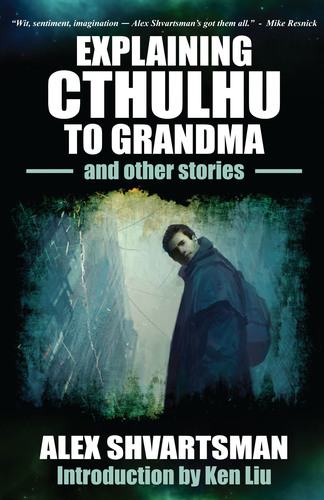
First up is the “High-Tech Fairies and the Pandora Perplexity,” a humorous Magic Pawn Shop fantasy story that features the same set of characters as “Explaining Cthulhu to Grandma.” This story was published in issue 37 of InterGalactic Medicine Show.  You have to subscribe the magazine to read the full story, but you can check out the opening scene and beautiful illustration by Andres Mossa.  Here’s a little sample, to whet your appetite:

“Never cared much for those,” said Grandma. “The things people try to put inside! In 1935, a fellow named Schrödinger shoved his cat into a Pandora’s box to prove some sort of a point. PETA activists from the 23rd century keep traveling back in time to egg his house, ever since. Using artificial eggs, of course.”

The other one is “The Keepsake Box” a flash fantasy story published at Daily Science Ficiton.  DSF e-mails their stories to subscribers (it’s free to subscribe!) a week before they’re posted on the web site, so those of you who do not already subscribe will be able to read it for free in a few days (I’ll post the link). For now, here’s a teaser:

She dumps the contents of the keepsake box onto the table and begins to chant as she picks up the items one by one, drains them of their power, and weaves the resulting strands of enchantment into her spell.
From the twig of the tree under which she met him, she drains excitement. It’s light and full of possibilities, like beats of a fluttering heart

This is not a humorous story. It’s dark and brooding, and kind of different from what I usually tend to write. I hope you enjoy it!

On the acceptances front, I just sold a suspense story (that’s right — not science fiction, not fantasy!) to Sherlock Holmes Mystery Magazine.

I was also invited to submit a story to a New Zealand-based steampunk anthology Angels & Automatons. They just launched a Kickstarter campaign to fund the book.

And, of course, I would be remiss not to mention the ongoing Kickstarter for UFO3. We have over 100 backers and raised a third of our goal already, but there’s still a long way to go, and I’d appreciate any and all help, in both pledges and sharing the details of this campaign.

#SFWAPro


UFO3 Cover Art and Kickstarter

January 19, 2014

#SFWAPro

image description

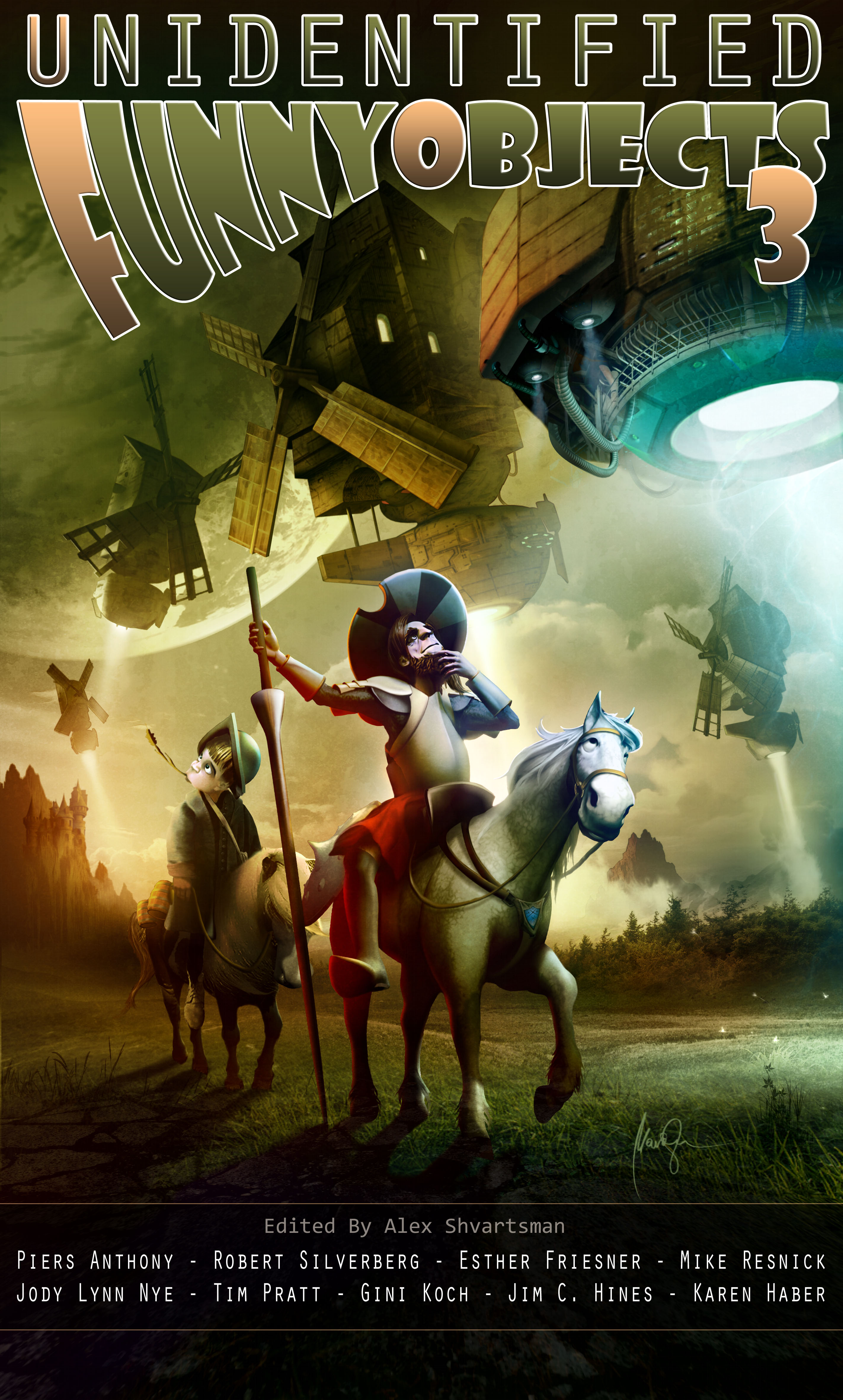
I’m thrilled to share cover art and the line-up of headliners for UFO3 with the world today! Although not yet listed on the cover mockup, NYT bestselling author David Farland just joined the list of headliners earlier this week. We’ll add his name on there shortly!

The Kickstarter campaign for the book launched today, with many lofty goals. I appreciate the help of anyone able to pledge, but even if you can’t spend the extra dough, please help by letting as many new people know about the UFO books as possible!

Click here to visit the Kickstarter page.


New Publication: Bedtime Story on Christmas Eve, 1,000,000 AD in Spark IV

January 17, 2014

spark

My humorous flash “Bedtime Story on Christmas Eve, 1,000,000 AD” appears in the current volume of Spark: A Creative Anthology.

In addition to my humble story and the great cover art, this volume is packed to the gills with amazing speculative fiction, including stories from my friends and fellow Codexians  like Brad Torgersen, Alex Kane, Annie Bellet, Erica Satifka, Alexis Hunter, Anna Yeatts, and Michael Hodges. And, to put the icing on the cake, the foreword is by Kevin J. Anderson.

A large percentage of my stories are published in online zines and can be read for free. In this case, you’ll have to actually buy the book. But you can get a nice discount — 35% off, until January 31, if you use a coupon code SHVARTSMAN-FRIENDS.

So there. Don’t say I never gave you anything.

Seriously though, editor Brian Lewis has produced a really nice-looking book, and you would do well to support Spark by picking up a copy if you can spare a few bucks.

In other news, I’m thrilled to have made my third sale to Mike Resnick’s Galaxy’s Edge magazine. After a tough-but-necessary rewrite, Mike accepted “Fate and Other Variables” — a story of a hacker and a kabbalist teaming up to alter what’s written in the metaphysical Book of Fate. What can possibly go wrong?

I’m very excited to share this story with the world, but there is no release date yet. Should be sometime this year, but likely after another story of mine (“Doubt”) sees the light of day at GE.


2013 Year In Review

January 1, 2014

Another year has come and gone — almost too quickly. It wasn’t as much of a spectacular writing-accomplishments year for me as 2012 was, but it was pretty darn good anyway.

I luuuurve me some data to crunch, so I continue the annual tradition of sharing my submission info with the world. First, I’d like to address my 2013 resolutions, which were definitely a mixed bag:

* Complete at least one novel and begin shopping it around to agents/publishers

Failed that one miserably. I have approximately 20,000 words written on the novel so far, and keep distracting myself with short stories. Definitely must get this done in ’14.

* Continue to participate in the Write1Sub1 initiative and write at least one new short story per month.

Blew that one out of the water by completing two short stories per month instead.

* Translate into English at least two SF/F short stories by Russian authors

Translated one short story (The Ferryman by Siarhey Bulyha) and am shopping it around.

* Attend at least one major SF con (something like WorldCon or World Fantasy) and a few smaller ones

WorldCon accomplished:

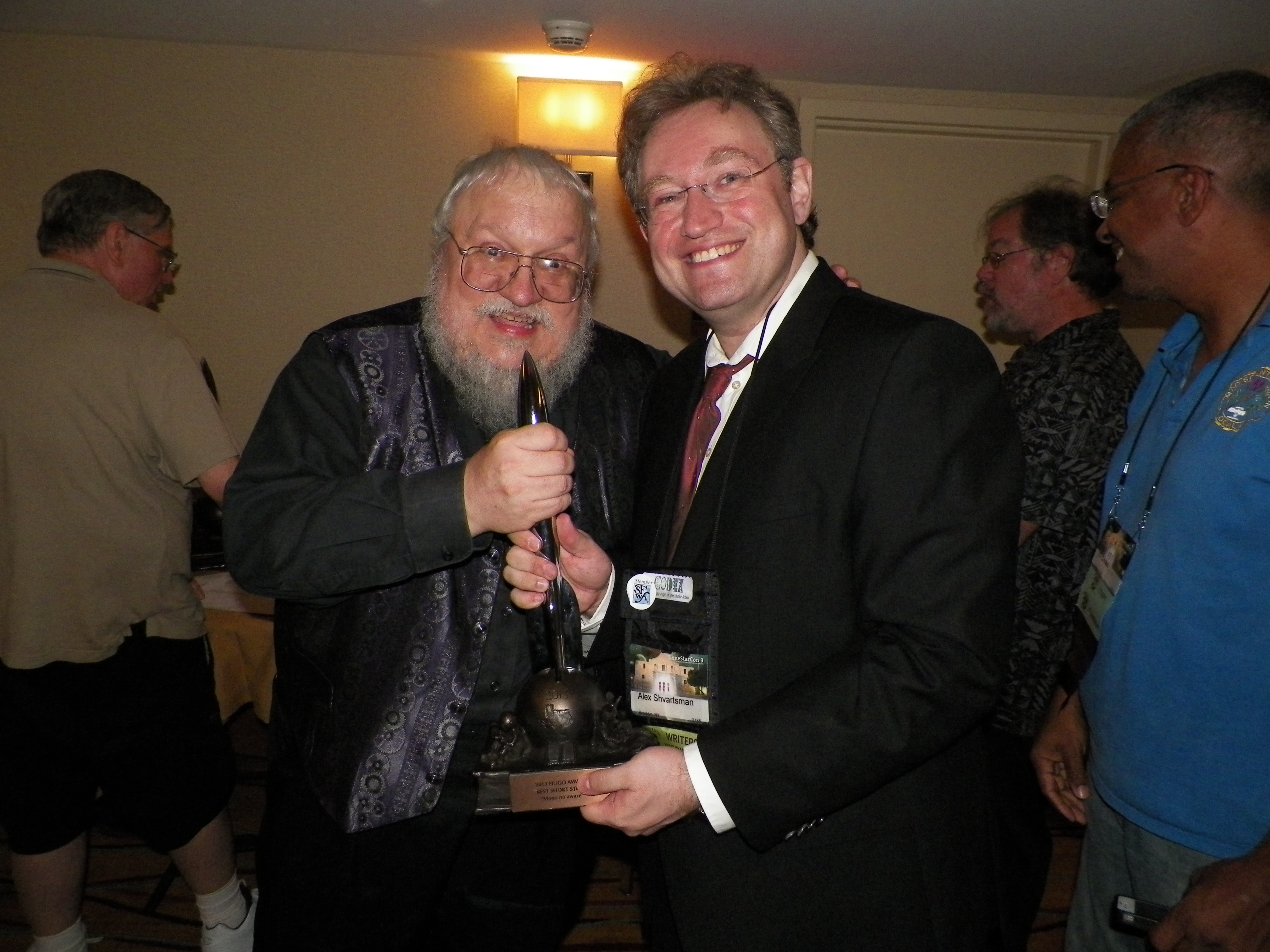
Ken's Hugo receives the George R.R. Martin seal of approval.

Ken’s Hugo receives the George R.R. Martin seal of approval.

I also got to attend LunaCon, BaltiCon, CapClave and PhilCon, and will likely be back to all or most of these next year. I  already registered for next year’s WorldCon in London.

And now, to the good stuff:

Short stories written in 2013: 24

This is not counting a handful of stories I started but didn’t complete for some reason. Totaling approximately 65,000 words. 11 of these have already been sold. One I felt wasn’t quite good enough to submit. The rest are out to markets.

Number of Submissions sent out (including reprints, foreign rights, podcasts, translation, etc.): 224

Number of Acceptances (includes stories submitted in 2012 but accepted in 2013):  39

Lost/Withdrawn: 2

Currently on Submission: 18 (with 3 more waiting for specific markets to open in January)

Rejections: 168

$ Earned from Short Fiction Sales: $1850

This is calculated based on what I’ve been paid for in 2013 (i.e. a bunch of stories from 2012, and a bunch of recent sales haven’t been paid for yet).

Non-Reprint Sales: 19

Pro Rates ($0.05+ per word) 13

Semi-Pro Rates ($0.01 – $0.04 per word) 5

Token payment: 0 (the only token market I even bother to occasionally submit to anymore is Every Day Fiction)

Royalty-only: 1 (A story I wrote for an anthology edited by a friend)

I also edited and published two anthologies: Unidentified Funny Objects 2 and Coffee. and began working on at least two more for 2014.

Overall it was a solid year, and I look forward to do more of the same in 2014. I do hope to get my first novel finished (and maybe even a second one if I can find a way to switch to novel mode). Otherwise, my major goal is to break into more of the top short fiction markets that haven’t yet published me.  And, most importantly, continue to have a great time being a part of SF/F fandom.

#SFWApro