Guest post: An Ode to Episodic, Serialized, and Anthologized Fiction by Emma Larkins

December 12, 2015

The following is an essay by Emma Larkins, written as part of her Mechalarum blog tour.

booktour

An Ode to Episodic, Serialized, and Anthologized Fiction

By Emma Larkins


“And specially from every shire’s end
Of England they to Canterbury wend,
The holy blessed martyr there to seek
Who helped them when they lay so ill and weak.”

-Geoffrey Chaucer, The Canterbury Tales

Ever since the dawn of language, humans have told stories. They used their tales to describe the location of food, to warn against danger, to strengthen bonds of community and friendship, or simply to pass the time.

Little physical evidence remains of these first stories, as writing didn’t exist until the Sumerians invented it around 2000 BC. Even then, oral traditions persisted: written works – and literacy – wouldn’t proliferate until the invention of the printing press a few millennia later.

Because of the oral nature of storytelling throughout much of history, stories were structured in a way that made them easily memorable. In part, storytellers accomplished this through the use of mnemonics (memory devices) such as rhyme and acronyms. Narrative structure also played an important part in memorization. For example, many similar stories were built around a particular character, like those detailing the exploits of Hercules. Other stories, like those making up Homer’s Odyssey, fit together in a particular order, building up over time to create an engaging narrative arc. Still others focused on a theme, such as the hubris of humans and how their lack of humility before the gods invariably lead to tragic consequences.

From Homer to Aesop to Chaucer, through the deft fingers of medieval bards to the bedsides of sleepy-eyed children, these stories passed from mouth to mind and back again. Over time, the words and meanings evolved until they were unrecognizable from their original form. The formats, however – episodic, serial, and collected around a theme – stuck around for good.

As literacy spread through the nineteenth and twentieth centuries, these formats started to fall to the wayside, with favor turning from the story to the novel. Readers grew accustomed to diving into the world of one author and one set of characters for an extended period of time. Literary fiction especially lent itself to the singular, long form story.

Today, these oral-tradition types of fiction are seeing a resurgence. Short form is a great way to dip into new and disruptive ideas. In this short-attention-span era, easy-to-consume is king. It makes financial sense, too – advances are dwindling (where they still exist at all), and many authors can’t afford to spend years on lengthy, detailed novels. Readers now well-accustomed to the episodic nature of most television shows easily transition to stories written in a similar form. Finally, the ever-growing interest in genre fiction lends itself particularly well to series and anthologies.

What differentiates these formats? How are they beneficial to writers? And to readers? Read on to find out!

Episodic Fiction

Episodic fiction follows a group of characters – usually in a recurring setting – as they experience life as it is revealed in the fictional universe. Alternately, the stories might revolve around a central device, such as an artifact or a location.

Episodic stories may or may not make use of continuity or story arcs. In the “snap back” trope, individual episodes act as silos: the storyline in one episode does not connect to that of the one before, and character situations and actions have no lasting consequences. In other cases, there may be some continuity between episodes.

Part of the rise in interest in episodic fiction is due to near-universal consumption of the format through television and movies. Another part is due to comic books and graphic novels gaining mainstream appeal (as demonstrated by the huge success of the Marvel movies and exploding interest in conventions like Comic Con). Audiences are more receptive than ever to one-off media experiences detailing the adventures of their favorite heroes that don’t tie together, even if those experiences directly contradict one another.

This flexibility is great for readers. They can enjoy unlimited narratives about their favorite characters and worlds without having to worry how it all fits together. They can pick up a comic book in a shop, read an issue digitally using apps like Comixology, or get a trade paperback which includes several comics in one compendium. They can jump into and out of universes at will, picking their favorite selections from a bountiful buffet.

Episodic fiction is also a boon for writers. More publications than ever before publish installments of short fiction – because readers might vary from day to day or from month to month, it’s beneficial when missing an episode doesn’t impact overall understanding and enjoyment. Writers can opt to self-publish and distribute episodic stories through their own websites, newsletters, and social media. Digital publishing platforms like Wattpad and Smashwords deliver stories to the masses in moments, with incremental funding through sites like Patreon providing authors with incentives to keep up the good work.

Serialized Fiction

Individually encapsulated episodes fill an important niche. However, often readers appreciate stories that tie together, with one or more ongoing story arcs continually fueling the hunger to discover “what happens next.”

The most well-known modern examples of book series are the trilogies, quadrilogies, septologies (and onwards) that swarm the shelves of bookstores and online retailers, often with ties to one or more popular genres.

Series can greatly benefit readers. When they find a character or universe that particularly appeals to them, they can relax knowing that their entertainment needs will be met for the foreseeable future, without the risk of diving into new works.

Many writers and publishers are fans of series as well. By their nature, series are easier to market and sell. Once you’ve got a reader hooked on one book, it’s a lot less work to get them to buy the next one than to convince them to try something new.

Series are nothing new, but we’re seeing innovations here as well. Or, more accurately, the re-emergence of trends popularized by the serialized fiction of Charles Dickens and others of his time.

Many writers now create worlds that can easily be expanded across formats and mediums. Instead of simply adding more novels to a series, they author supplementals, short stories, or novellas to fill in the gaps and enrichen their worlds. Savvy creators don’t ignore tie-in materials such as videos, games, art, graphic novels, and movies – they do whatever it takes to build an all-encompassing narrative.

Anthologized Fiction

Another way to take advantage of the modern interest in episodes and series is through anthologies – editor-curated collections of short stories that focus on a central element, such as genre (science fiction, fantasy, horror) or theme (summer romances, coming-of-age, humor). Anthologies gather together the works of many writers, giving readers the opportunity to enjoy a collection of voices, styles, and points-of-view all in one place.

Readers with hectic modern schedules appreciate the ability to dip into an an anthology for a few minutes, having completely forgotten the previous story. They can return to an anthology weeks or months after starting, without needing to remember the history of characters or storylines. Anthologies also offer an easy way to delve into the history and breadth of a genre. For example, there’s nothing quite like experiencing the what science fiction was like back in the 70’s or 80’s.

Writers enjoy great benefits from participating in anthologies. They often earn greater recognition than they might otherwise receive from publishing only their own stories. And they can experiment with new ideas and styles in a low-risk environment

Editors and publishers love collecting stories in this manner. Creating an anthology means having a whole host of authors (and their networks and platforms) to promote the work, instead of just one. Not only that – it’s a great way to build relationships with talented writers which can lead to fascinating collaborations in the future.

Episodes, series, and anthologies – fun fiction formats that are worth checking out, whether you read, write, or get paid to sell stories.

About Emma Larkins:

EmmaLarkins

Emma Larkins is a science fiction author and card game designer who loves puns. Her influences include Tamora Pierce, Piers Anthony, Douglas Adams, J.R.R. Tolkien and C.S. Lewis.

She writes accessible scifi that teases the edges of your imagination without making you feel like your brain has gone through a blender. Her characters face the world with wry humor, even as it comes crashing down around them. Her stories are filled with action and adventure. After all, what’s the point of a tall tale if it doesn’t make your heart race?

Stop by her Twitter or blog to learn more, or just say hi!
mechalarum

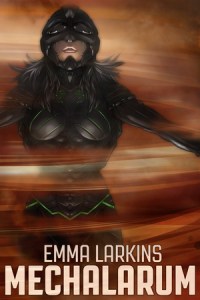
In the dystopian science fiction novel Mechalarum, sciencers toil in a last-ditch effort to defeat the offworld Losh, who have rained death from the skies for twenty years. They work to build and perfect Mechalarum flying suits for fearless pilots to infiltrate and destroy the Losh airships from within.

The most skilled of these pilots, Kiellen Corr, never wavers in her dedication to the cause until she is blindsided with betrayal after a fateful discovery. With her faithful sciencer friend Gage Turman by her side, she must fight to understand the true nature of the Mechalarum suits, the Losh, and herself.

#SFWAPro


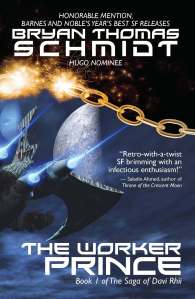
The Hook: The Worker Prince by Bryan Thomas Schmidt

November 30, 2015

TWP WFP front cover

The Hook:

Sol climbed to the top of the rise and stared up at the twin suns as they climbed into the sky. Yellows, reds, and oranges faded under the increasing blue of oncoming daylight, leaving a pinkish glow on the horizon, and the ever-present smell of chemicals and fuel filled his nostrils but he barely noticed.

For as long as he could remember, he’d started each day with an escape from the heavy, polluted air and the noise of people, factories, and traffic. The peaceful, quiet sunrises would usually calm him to face the day ahead, but today he had no sense of peace, and the silence of the city’s edge drowned beneath the clamor within him.

My precious son! My God, don’t forsake us now!

The wait had been interminable, punctured by endless prayers to God for a precious gift. Now they had to send him away—their Davi! Was there no justice in this universe?

He glanced at his chrono and sighed. Wouldn’t want to be late to serve the Borali Alliance! After one last look at the twin suns, he turned and hurried back along the path toward Iraja and the starport filling the horizon near the city’s edge below.

He labored more with each breath as heavy air filled his lungs. The depot occupied a strategic site at the center of the planet, ensuring easy access from all regions. Ignoring the droning soundtrack of the city awakening, Sol timed in on the chrono and greeted Aron, his co-worker and lifelong friend.

Bryan Thomas Schmidt writes:

The Worker Prince is a reimagining of the Moses story as a space opera. The basic premise, of course, is that a prince discovers he was born a slave and develops sympathy for his genetic family, bringing him into conflict with his adoptive ruling family. In Moses’ cases, God speaks to him, but instead, I chose to drop the Ten Commandments, burning bush, and miracle stuff, and instead focus on a hero’s journey and coming of age story. As Davi’s convictions cause him to question the status quo, he finds himself questioned by his friends and family, even as he seeks to investigate where he came from and who he is. As always with such journeys, Davi begins to transform as things he discovers match up with the liberal education his mother, Princess Miri, provided him in the Palace. Unlike most leaders in the Borali Alliance, he was taught to think for himself and question everything, an approach his Uncle Xalivar — presently High Lord Councilor and leader of the Borali Alliance — would never have allowed had he known. Soon, Davi’s convictions find him defending a slave girl from rape by a fellow officer and the officer dies at Davi’s hand. Now, Xalivar sends his special police to hunt Davi and Davi goes from prince to wanted fugitive. Events unfold that change his relationship with his once loving, doting uncle forever, and alter his whole life and sense of self.

I chose to open the book with a prologue set 20 years beforehand where Davi’s parents must send him away to save his life after Xalivar issues a decree that all first born must be slain. This accomplishes two things, establishes Xalivar and the parents early as important figures, allowing me to unfold the story and their roles more slowly, and sets up the loving family Davi was born into and their sacrificial love. Since he doesn’t discover their existence for 3 chapters, this helps us to feel an emotional connection with them and root him on in making the discovery. The book also pays tribute to the space operas I loved growing up, from Star Wars: A New Hope¸which I tried hard to capture the feel of (and am told I did), to Battlestar Galactica, Superman (Reeves), Buck Rogers, Star Trek and more. From little snippets of dialogue borrowed as a wink-wink to fellow fans, to a few plot elements, etc., I incorporated subtle pop culture references to these things while also trying hard to keep a good mix of action and humor. The story moves quickly and has a complicated plot that unfolds little by little with lots of political maneuvering, twists and turns, and more. It’s also an ode to old fashioned B-movie/golden age style stories but without the women depending on men aspect. I have women in various roles, and yes, Davi saves one from rape, but she and the others come into their own as strong women in various leadership roles, fully equal to the men. That was important to me in retelling this story for modern audiences and in representing my own experiences with strong women in my family growing up.

This book is the first in a trilogy, and sequels will follow next year, a few months apart. We redid the first one because everyone felt it deserved a bigger audience and the original micropress publisher closed down. Kevin J. Anderson and Peter Wacks expressed interest, so I revised and expanded The Worker Prince, am revising book 2, The Returning, and then we’ll release the brand new book 3, The Exodus, to finish the saga. They also designed a knock out new cover. Very excited to have the chance for more people to discover and enjoy this series. I dreamed it up when I was a teenager and it is a blast to see if become reality 30 years later.

The Worker Prince: Author’s Definitive Edition debuted November 4th in print, audio, and ebook.

Buy The Worker Prince on Amazon

Enter to win The Worker Prince on Goodreads

About the author:

Bryan Thomas Schmidt is an author and Hugo-nominated editor of adult and children’s speculative fiction. His debut novel, The Worker Prince received Honorable Mention on Barnes & Noble Book Club’s Year’s Best Science Fiction Releases. His short stories have appeared in magazines, anthologies and online. As book editor he is the main editor for Kevin J. Anderson and Rebecca Moesta’s WordFire Press where he has edited books by such luminaries as Alan Dean Foster, Tracy Hickman, Frank Herbert, Mike Resnick, Jean Rabe and more. He was also the first editor on Andy Weir’s bestseller The Martian. His anthologies as editor include Shattered Shields with co-editor Jennifer Brozek, Mission: Tomorrow, Galactic Games and Little Green Men–Attack! (forthcoming) all for Baen, Space Battles: Full Throttle Space Tales #6, Beyond The Sun and Raygun Chronicles: Space Opera For a New Age. He is also coediting anthologies with Larry Correia and Jonathan Maberry set in their New York Times Bestselling Monster Hunter and Joe Ledger universes. From December 2010 to June 2015, he hosted #sffwrtcht (Science Fiction & Fantasy Writer’s Chat) Wednesdays at 9 pm ET on Twitter as @SFFWRTCHT.

###

#SFWAPro
If you’re an author with a book coming out soon and you wish to participate on The Hook, please read this.


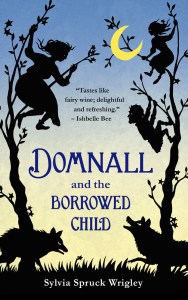
The Hook: Domnall and the Borrowed Child by Sylvia Spruck Wrigley

November 11, 2015

Domnall Cover

The Hook:

For centuries–more than that, millennia!–since the beginning of time itself, the fae had celebrated the Spring by finding the bluebells and creating a faerie ring. And now, apparently, that was all over. Too dangerous, squeaked the Council. Times have changed. Tradition simply tossed to the wind like dandelion seeds.

Domnall stabbed his walking stick into the muddy earth to navigate the bog as carefully as possible. Dirty snow still crusted the north side of the hills. He spat and trudged through the mud as the afternoon sun sunk low. Maybe he should head out, leave this place and plead for safe passage from the sluagh–they still ruled their lands, at least. A chortle escaped him at the thought of his short round self jogging behind a pack of high-flying sluagh, terrorising the local villages. Maybe not.

A scrabbling sound ahead broke into his thoughts and he froze, scanning the scrubby land for movement. When nothing else stirred, he crept carefully towards the protection of the woods.

Sylvia Spruck Wrigley writes:

Domnall and the Borrowed Child is a traditional fantasy story set in Scotland and follows the tribulations of an old and cranky scout named Domnall. When a Seelie child falls deathly ill, Domnall has to trick a human family into giving it Mother’s milk, an old ploy of the good folk but one that they haven’t had to resort to in a century or more. Domnall faces cunning humans, hungry wolves, and uncooperative sheep in his attempt to save the child.

I had two challenges to tackle in the first few paragraphs of the book. The first was to quickly make it clear that it was not a fairy tale and definitely not a children’s story. Domnall is lovable (well, I like to think so) but very much for adults. The second challenge was to make it clear that these were not Disney fairies who loved humans but instead a separate culture with their own politics and viewpoint.

Originally the story started in front of the Sithein, with Domnall speaking to his friend when Maeve comes out to tell him that they need his services. The opening scene was completely serviceable but it was a bad place to try to feed in the backstory.

Usually, I try to drip-feed information later in the story but in this case, I backed up instead. In that initial scene, Maeve is interrupting Domnall’s evening because she has an emergency, so I had to think about what she was interrupting. His peace and quiet, of course, but why did he feel he deserved it? The answer could only be because he’d spent all day on a thankless task. This gave me a great new scene and an opportunity to introduce Domnall properly, not just as the Sithein’s scout and all-around friendly guy. His internal frustration at the politics of the Sithein and the changing world was allowed full reign. Of course, his thoughts needed to be interspersed with action, so I took the chance to show his interactions to his environment and, a few paragraphs in, his reaction to a human child wandering through the forest.

This is interesting because usually I would attempt to drop the reader into the action in the first few paragraphs. This time, instead of setting up the plotline with Maeve, I slowed things down and offered an introduction to the narrator, the world and (most importantly) the type of book to expect. Domnall’s story is more of a fun romp than high action and adventure, so this hook sets the mood.

It’s not general advice that I would give for working out where the story starts but in this case, it was right for the story.

Buy Domnall and the Borrowed Child on Amazon.

About the author:

Sylvia Spruck Wrigley was born in Germany and spent her childhood in Los Angeles. She emigrated to Scotland in 1990, guiding German tourists around the Trossachs while she searched for the supernatural. She now splits her time between South Wales and Andalucia where she writes about plane crashes and faeries, which have more in common than most people might imagine. Her short stories have been translated into over a dozen languages. Domnall and the Borrowed Child was released this week by  Tor.com as a part of their new novella imprint. You can find out more about it at http://domnall.intrigue.co.uk

###

#SFWAPro
If you’re an author with a book coming out soon and you wish to participate on The Hook, please read this.


The Hook: King of Shards by Matthew Kressel

October 13, 2015

perf5.500x8.500.indd

The Hook:

Daniel was getting married today, but all he could think about was work. In the musty Hebrew school classroom of Temple Beth Tiferet he pulled the black suit jacket over his shoulders and remembered the storm, how he had laid warm blankets over weary shoulders. He tightened the knot of his wine-dark tie and remembered wrapping gauze around swollen legs. Those folks didn’t have homes — hadn’t for years, and yet here he was, about to venture off to an island for two weeks of luxury and indulgence. And what about Gram, who would remain home, alone, with no one to call if she needed help? He wanted to keep Rebekah happy, but the truth was he longed to stay in New York and continue working for the Shulman Fund, where he fought for the city’s homeless. He wanted to stay close to Gram, the one who had raised him. But Rebekah, as sympathetic and understanding as she could be, had said their honeymoon was non-negotiable. They would be leaving first thing in the morning.

Fully dressed now in his itchy black wedding suit, Daniel gazed out the window. Last week’s hurricane — unusual for New York — had swept out the late-summer warmth, and outside the afternoon air was crisp and biting. The sun descended over a copse of tall Westchester oaks, and the light pierced the blinds, sending ladders of orange across Christopher’s smiling face. Christopher managed the Rising Path shelter that Daniel had helped build, and as he turned, the sun illuminated the tattoo on the dark skin of his neck: a crucified Jesus, blood spilling down his face from his crown of thorns, gazing up at God, awaiting redemption.  

“I’ve never been to a Jewish wedding,” Christopher said. “You told me about some of your customs, but I’m excited to see them for myself.”

Christopher turned, and the shadow of his neck darkened the sky above Jesus, as if storm clouds were rolling in. “The rituals are beautiful,” Daniel said, “but sometimes I feel as if it’s more about the performance than the meaning behind them.”

“All rituals are performances,” Christopher said. “That’s the whole point, isn’t it?”

Above the chalkboard a paper Hebrew alphabet had been stapled to a long cork strip. In the orange sunlight, the letters seemed to burn. The letter Ayin was missing. Ayin, the divine nothing. Ayin, the good or evil eye, depending. At least, that’s what Gram had said. Daniel shook his head. Now wasn’t the time for her silly superstitions. Outside, the branches of dead trees shivered in the wind.

Matthew Kressel writes:

King of Shards is an epic fantasy novel based partly on ancient Jewish mythology and folklore. One myth that has always fascinated me is the legend of the Lamed Vav, or the thirty-six anonymous saints who uphold the world. No one knows who these Lamed Vav are, and the myth says that even you or I could be one. If any one of these saints ceases to be righteous, the world would be destroyed. In King of Shards, Daniel Fisher discovers he is a Lamed Vavnik and that demons have been searching for his kind for millennia, trying to kill them.

Another myth I find fascinating is the so-called Shattered Vessels of Creation, a theory, elaborated by the 16th century Kabbalist Isaac Luria, that our universe wasn’t the first to be created. There were others that came before ours. But they displeased God — they had too many imperfections — and so God smashed them. In King of Shards, these primordial worlds were not empty, but populated with sentient beings — demons. A few survived this cosmic Shattering and live on fragment husks — the Shards — where they cling miserably to life.

And they’re pissed.

In the cosmology of King of Shards, the Earth serves as a kind of fountain that waters the many universal fragments of the Shards with its life force. Without Earth’s water of life, the Shards would wither and die. Earth is relatively abundant and prosperous, but the Shards are brutal hell worlds. Nothing lives on the Shards for long, and the demons that dwell there endlessly struggle for meager scraps.

So when it comes to pass that a few demons discover the names of the hidden Lamed Vav, they hatch a plan to kill them all. They hope that if they kill the Lamed Vav and destroy the Earth, the waters of life will spill in a great torrent upon them, bringing them life and abundance that has been denied them for so long.

It’s a crazy plan, and none other than Ashmedai, king of demons, recognizes the insanity of it. But Ashmedai has little power to stop them. He’s been dethroned and cast out of Sheol, the most ancient of Shards. Weak, alone, and vulnerable, Ashmedai needs Daniel’s help to stop the demons before they destroy all of existence with their foolish plan.

And so Daniel and Ashmedai, saint and demon, must join forces to save the world. But Ashmedai is not everything he appears to be. He is demon, after all.

I have always been fascinated with the apocryphal tales of Judaism, stories that began as folktales after the canonical Hebrew bible was set down. These tales were passed from generation to generation, evolving over time, until we hear engrossing tales of dybukks, lost souls who possess brides-to-be; golems, mounds of clay animated with the Holy Name of God; and shedim, demons who leave bird-like footprints by the beds of sleepers. There are literally thousands of these stories, and it would take a lifetime to explore them all. I’ve been outlining a few of these myths over on my blog.

Not all of these myths found their way into King of Shards, of course. I began with a few lesser-known myths as jumping-off points, but I never let them interfere with my creativity. Ultimately, I wanted to tell an exciting adventure fantasy. So while King of Shards is based on mythology, it’s not constrained by it, and many of the creations in the book are my own. I hope this inspires you to check out King of Shards and try to guess which ones are which.

King of Shards debuts October 13th in print, audio, and ebook.

Buy King of Shards on Amazon

About the author:

Matthew Kressel is a multiple Nebula Award-nominated writer and World Fantasy Award-nominated editor. His short stories have or will appear in such publications as Lightspeed, Nightmare, Clarkesworld, io9.com, Beneath Ceaseless Skies, Interzone, Electric Velocipede, Apex Magazine, and the anthologies Naked City, After,The People of the Book, and The Mammoth Book of Steampunk, as well as other markets.

###

#SFWAPro
If you’re an author with a book coming out soon and you wish to participate on The Hook, please read this.


The Hook: Windswept by Adam Rakunas

September 1, 2015
Windswept-full
The Hook:
I was sitting at my usual stool at Big Lily’s, talking with Odd Dupree about his troubles down at the plant, when something big and stupid came crashing through the front door. Vytai Bloombeck’s head swiveled like a pumpkin mounted on a sack of compost as he scanned the faces of the regulars. I tried to duck beneath the ironpalm bar, but it was too late — he had zeroed in on me. “Padma!” he shouted, moving toward me like a runaway cargo can, “I got something, make us both righteously wealthy, like Jesus would want.” He shoved Odd to the side as he plopped into two chairs. Odd’s eyes rolled back into his head from the smell. Bloombeck’s job was to fish blockages out of the city’s sewer mains, a Contract slot he’d kept since Time Immemorial because no one was stupid or desperate enough to take it from him.

“Not even Jesus wants you, Bloomie,” I said, wincing at the stabbing pain in my right eye. My pai was supposed to float text warning me that Bloombeck was within one hundred meters, but, thanks to the vagaries of my brain chemistry and the implant’s firmware, the damn thing always gave me an electric jab in the retina after he’d shown up. I’d complained to every tech I know, and they all shrugged their shoulders and gave me the Santee Anchorage Song-And-Dance about how We Don’t Have The Proper Tech, We Don’t Make Enough To Care About Your Problem, Just Wait For The Next Bloody Update. The Oh-God-It’s-Bloomie warning squatted between a migraine and my period on the pain scale, and the only treatment that worked was avoiding him. “You want to talk to me, you make an appointment.”

Adam Rakunas writes:

I started writing this book in a bar, so it made sense to start the book *in* a bar. Bars are places for forgetting, for resting, for *waiting*, and Padma Mehta, the heroine of Windswept, is waiting for a lot of things: to retire, to cinch the deal of her life, to get out of the rat race. In the meantime, she is sitting at her favorite spot in Big Lily’s, watching out the lanai as the city rolls away toward the ocean. This spot is important to her because it offers a mixture of security and respite; the instant she sits down in that stool, she has a little bit of control over the chaos that surrounds her.

Of course, it’s not perfect, or else someone like Vytai Bloombeck, the neighborhood con artist, wouldn’t be able to enter the bar and try his pitch on Padma. On Santee Anchorage, everyone has to hustle, and Padma’s no different. Her hustle is on a much grander scale than Bloombeck’s, but it still means she has to bribe, lie, and fight to get what she wants: an early pension and a sweet bonus if she recruits five hundred people to the Union. She won’t listen to Bloombeck now, but, when her plans collapse, she’ll have no choice.

Buy Windswept on Amazon.

About the author:

Adam Rakunas is the author of Windswept and its forthcoming sequel. He’s a stay-at-home dad, an amateur cellist, and a small-time political rabble-rouser. You can find him at adamrakunas.com or on Twitter @rakdaddy. He also wants you to know that Jessica Smith did the amazing cover art, and you can find her work at http://www.artofjess.com.

###

#SFWAPro
If you’re an author with a book coming out soon and you wish to participate on The Hook, please read this.


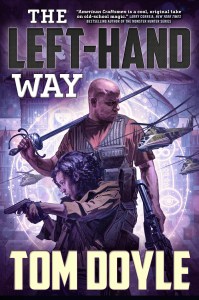
The Hook: The Left-Hand Way by Tom Doyle

August 11, 2015

9781466834583

The Hook:

The Court of the Red Death

And Darkness and Decay and the Red Death held illimitable dominion over all.

Edgar Allan Poe

In Pripyat, the first snow of the year fell early on the deserted city and on the steel arch that hung over the Sarcophagus covering the ruined Chernobyl power plant. The windless cold was appropriate for this urban tomb, but unseasonable for early autumn, and the below-freezing temperature and snow were confined to this small, desolate pocket of Ukraine.

Seven Russian soldiers, five men and two women, arrived singly at the exclusion zone that enclosed the town, having entered the country in civilian dress by car, train, plane, bus, and boat. They were spetsnaz magispecial forces mages. One of them had been in Kiev for over a year; the Kremlin had kept him in place and ready for such occasions. Two had crossed through Belarus, whose Moscow-dominated craft authority had raised no fuss.

Tom Doyle writes:

To set my hook, I had an extra problem to consider besides the usual ones. The Left-Hand Way is a sequel to American Craftsmen, a contemporary fantasy of magic and military intrigue but with a backstory in which Poe and Hawthorne were writers of thinly veiled nonfiction. I needed a beginning that promised as much action as the special ops opening of the previous book, yet would welcome new readers.

I decided to establish the villain first, as the Devil often gets the best music. At the end of the otherwise self-contained first book, one of the antagonists, Roderick Morton, escapes to Ukraine, but his horrible condition seems more pathetic than menacing. Part of choosing to begin with Roderick was personal–I was anxious to write about him so that I too could find out what he had become.

In his earlier life, Roderick was known as the Red Death both for his numerous killings and for the corpse-like mask and grave garments he wore for his bloody rituals. I titled the opening “The Court of the Red Death” in a nod to “The Court of the Crimson King” by the prog-rock band King Crimson. That and the Poe quote regarding the Red Death’s dominion set the scene for a Roderick who is no longer nearly helpless and on the run, but is in full possession of his powers, old and new.

So that was how I made the choice of whom to begin with, though he is still offstage in this hook. The next question was where to start. Ukraine has two places sufficiently notorious and ghastly for the murderous Roderick. The first, Chernobyl and its ghost town, Pripyat, is where I have the hook. But I also use the second location, though later in the opening: Babi Yar, the ravine (now a park) in Kiev where the Germans massacred Jews and others, with over 100,000 killed there.

Finally, I introduce the opposition to Roderick for an opening fight scene: seven Russian soldiers who’ve been ordered to kill the American. Like most of my magician soldiers, the leader of the Russians has a ancestry with historical significance, as his great-grandfather died holding the line outside of Moscow during World War II after months of helping to delay the Germans until winter could descend on them.

In my magical world as in the real one, seven to one should be absurdly lopsided odds, but of course the villain will find a way to survive, establishing just how powerful he’s become in the interlude between books. Thus, when my protagonists come on the stage in the next section, readers will know better than they do how perilous their situation is, creating a tension that only grows throughout the story.

Buy The Left-Hand Way on Amazon.

About the author:

Tom Doyle is the author of the American Craft fantasy series from Tor Books. In the first book, American Craftsmen, two modern magician soldiers fight their way through the legacies of Poe and Hawthorne as they attempt to destroy an undying evil–and not kill each other first. In the sequel, The Left-Hand Way, the craftsmen are hunters and hunted in a global race to save humanity from a new occult threat out of America’s past. Tom’s collection of short fiction, The Wizard of Macatawa and Other Stories, includes his WSFA Small Press Award and Writers of the Future Award winners. He writes science fiction and fantasy in a spooky turret in Washington, DC. You can find the text and audio of many of his stories on his website, www.tomdoylewriter.com.

###

#SFWAPro
If you’re an author with a book coming out soon and you wish to participate on The Hook, please read this.


The Hook: The Floating City by Craig Cormick

July 8, 2015

TheFloatingCity

The Hook:

The story starts with a murder.

It is a warm autumn night in the Floating City, and the waterways are still between the turning of the tides, and a little fetid. A dark gondola moves across the grand canal with a tall man and woman seated together in the boat. They wear ornate masks of birds, beset with tawny orange feathers and jewelry, and hold hands gently. Were there not such a large blood moon this evening it would be possible to see a soft glow emanating from where they touch.

The gondolier also wears a mask – but his is a plain white face, as if all the features have been erased from it, except an enigmatic smile. Ahead of them is a large golden palace, that seems to float on top of the water. It is ablaze with light as if there were a party for a hundred guests going on inside. But in fact it is empty except for servants. The master and mistress of the house are on their way back from a troubling meeting of the city’s Seers.

They will have need to discuss it with each other until late into the night, but for now they sit in silence, the only sound the soft splash, splash, splash of the gondolier’s oar, moving them forward.

Craig Cormick writes:

And the murder happens just a few paragraphs later. Two murders in fact, as a fearsome monster rises out of the canal, fights with the two Seers and slays them. And as they die their splendid palace sinks beneath the waters – letting you know it was only their magic that kept it afloat.

The Floating City is the second novel in my Shadow Master series, set in a world very much like Renaissance Italy, and this city is very much like Venice, but where magic and demons abound.

There are four pairs of magic Seers, protecting the city – one pair for each season, and they are slowly being killed off. As are the City’s Council of Ten. Monster and masked assassins and spies everywhere, all battling for control of the city. And just when things get desperate – the mysterious Shadow Master appears. He is armed with lightning fast swords, advanced gadgets and a sarcasticwit. He also has a scribe follow him around the city, while he dispatches his form of justice, and has him write the city’s history anew.

But that’s only half the story. The other half revolves around three very strong female characters, the Montecchi sisters: Giuliette, Disdemona and Isabella, who are each struggling to write their own destinies.

You might have picked them as being similar in name to Shakespeare’s characters: Juliet, Desdemona and Isabella from Romeo and Juliet, Othello and the Merchant of Venice – which is only half right. For I’ve gone back to the original Italian stories that Shakespeare adapted his plays from, and used those “origin” characters and plot structures within the novel. The original stories are worth checking out if you’re interested in seeing the way that Shakespeare built upon them and changed them: Luigi da Porto’s Giulietta e Romeo of 1530, Ser Giovanni’s Il Pecorone (the Dunce) of 1558, and Giraldi Cinthio’s Hecatommithi of 1565.

As for the starting point, or hook, I wanted to start the story at a major plot point, and then fill in the back story afterwards as we romp along – much as Shakespeare did in plays such as Hamlet. I think action is a great driver of plot and characterisation.

I also think the Shadow Master books are a fast-pace and fun read. And what I enjoy about them as the author, is when readers ask me, ‘So when are you going to explain a bit more about just who that Shadow Master character actually is?’ – I keep saying, ‘Well – maybe in the next book.’

After all, where is the fun in giving away all the mystery?

Buy The Floating City on Amazon.

About the author:

Craig Cormick is an award-winning Australian author and science communicator. He has published over 20 works of fiction and non-fiction, ranging over several genres. He has also published over 100 short stories.

The Shadow Master was published to widespread critical acclaim by his wife and mother in 2014, and they have great expectations for the Floating City!

You can find Craig online at his website craigcormick.com

###

#SFWAPro
If you’re an author with a book coming out soon and you wish to participate on The Hook, please read this.


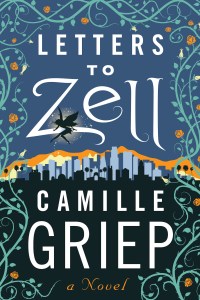
The Hook: Letters to Zell by Camille Griep

July 1, 2015

LettersToZell

The Hook:

We were all waiting for you at the Swinging Vine so we could start our book club, when poor DJ dropped your note off with the first round of wine. You won’t be surprised to learn Bianca went off like a confetti cannon, pelting him with accusations of cowardice and collusion.

All this drama to let us know you left to manage a unicorn preserve? I thought that sort of rural charity work was only for indulgent royalty out West. You said in your note, “I’ve always dreamed of making a difference.” Since when? I know you love animals, but this is a bit more involved than leaving a saucer of milk out for stray kittens.

Camille Griep writes:

Letters to Zell is the story of what happens when CeCi (Cinderella), Bianca (Snow White), and Rory (Sleeping Beauty) begin to compare their dreams with the expectations of adulthood and womanhood.

This examination – and the adventure that follows – does not come without a catalyst. Not only is Rapunzel (Zell) the recipient of the letters within, her own self-examination and subsequent departure sets things in motion, as her friends react to the news she’s decided to chase her dream of opening a unicorn preserve.

As was told to me so often as I wrote this, fairy tale retellings are a dime a dozen these days. In order to use these Grimm princesses as a mirror for reality, I chose not to retell their tales, but to work in the blank space of their unwritten Happily Ever Afters.

I began Letters to Zell at the wine bar after the info bomb for three reasons:

1. Because the novel is quite satire-heavy, I wanted to take the clichés of female friendship, wine bars and book clubs, trashy novels and secrets, and smash them into a sit-com ready tableau. Here we meet three friends waiting around for a fourth, who not only isn’t going to show, but has cleared out entirely.

2. We’re immediately immersed in the three voices we’ll hear for the rest of the narrative – though we begin with their personalities turned up to eleven, as any good satire does.

The first letter belongs to the wry and practical CeCi, who explains the reactions of the foul-mouthed loose cannon, Bianca, and the correspondingly prim and proper Rory. CeCi herself puzzles over Zell’s motives for wanting something more, for leaving, and for not saying goodbye – incidentally proving Zell’s fears of a messy farewell would have been more than founded.

3. Starting the book here also gave me the ability to immediately introduce the internal conflict and central theme of the book. While CeCi is hurt and indignant, she’s also profoundly curious, even jealous. Her ensuing realization that her love of cooking could become something more permanent blossoms into her excursions in Los Angeles, enrollment in cooking school, and the close examination of the future she is supposed to want.

Settling in with CeCi, the most reliable of the three narrators, puts the reader on a path toward appreciating the arcs of the more extreme of their number. As the satire softens and the clichés fall away, CeCi will continue to guide the reader via utilizing her stature as Zell’s very best friend. I hope fairy tale and epistolary aficionados alike will find joy in this intimate tale of contemporary friendship and the pursuit of happiness.

Buy Letters to Zell on Amazon.

About the Author:

Camille Griep lives and writes just north of Seattle, Washington. She is the managing editor of Easy Street and a senior editor at The Lascaux Review. Letters to Zell, is her first novel. You can read more at www.camillegriep.com or chat with her on Twitter @camillethegriep.

###

#SFWAPro
If you’re an author with a book coming out soon and you wish to participate on The Hook, please read this.


The Hook: Cities and Thrones by Carrie Patel

June 28, 2015

CitiesThrones-144dpi

The Hook:

Jane Lin and Fredrick Anders had been on the run for two weeks when they reached Meyerston. They fled not only the revolt in Recoletta, but also the news that would surely follow it. It was a vague and amorphous thing, but Jane had seen well enough how it sowed panic, suspicion, and violence in its wake. She was not certain what form it would take in the communes, but she knew they would do well to stay ahead of it.

As difficult as it was to gauge the progress of an invisible and impersonal antagonist, in their journey between the communes, they’d encountered nothing more than courteous – if deliberate – remoteness. Footpaths and farmers guided them from one commune to the next, where they were received and dispatched with polite disinterest.

Until they reached Meyerston.

Carrie Patel writes:

One of the challenges of beginning a sequel is picking up from a previous story without slowing down in the new story. You want to bring new readers into the action without giving them whiplash, and you want to serve up your stakes with a side of context.

What better way to kick things off than to have your characters start the new book by running for their lives from the ending of the last book?

Cities and Thrones is about a revolution that starts in the city of Recoletta and spreads. It’s about the characters that alternately flee, fight, and adapt to that revolution. It follows the aftershocks of all of the turmoil and upheaval from The Buried Life and traces the fault lines that split across a region and the people who live in it.

In the opening paragraphs, Jane and Fredrick are escaping Recoletta, the only home they’ve ever known, to shelter in strange new lands. They’re fleeing the grim certainty of violent change for the uncertainty of the unknown.

And all the while, they’re being chased by something that’s little more than a whisper on the wind—the unrest that’s riding in the wake of the revolution and the mention of their names as conspirators and fugitives.

So they scramble and sneak, navigating new territory and the guarded people who inhabit it. All goes as planned until they reach the quiet farming commune of Meyerston, where once again, everything changes.

Buy Cities and Thrones on Amazon.

About the author:

Carrie Patel is an expatriate Texan living in Southern California. Her first novel, The Buried Life, met with critical acclaim, including a starred review in Publishers Weekly. Cities and Thrones comes out July 7. She also works as a narrative designer for Obsidian Entertainment, and she wrote most recently for the RPG Pillars of Eternity. Her short fiction has appeared in Beneath Ceaseless Skies.

Exchange virtual fist-bumps with her on Twitter at @Carrie_Patel, or visit her website.

###

#SFWAPro
If you’re an author with a book coming out soon and you wish to participate on The Hook, please read this.


The Hook: The Singular & Extraordinary Tale of Mirror & Goliath by Ishbelle Bee

June 1, 2015

MirrorGoliath-144dpi

The Hook:

In the summer of 1887, my grandfather stole a clock. He trundled it out in a wheelbarrow and loaded it into a pony and trap, and off he went with a click-ity clop. A big smile stretched across his face like a chalk line drawn by a child on a blackboard, wonky and unsure.

Click-ity clop

The clock was six feet high

Click-ity clop

and the shape of a coffin.

Ishbelle Bee says:

The beginning of my book neatly sums up its entire premise – an object of great power: a sinister clock which is obsessively pursued by a variety of individuals because of what it contains. As the grandfather clock is the shape of a coffin, it is suggestive of  acting as a vessel in which to place a dead body. In this case, the object inside the clock is a little girl called Mirror, locked inside by her insane grandfather. She is rescued by a policeman who becomes her supernatural guardian but they are pursued by the Lord of the Underworld assassin, John Loveheart, because he wants to eat her and absorb her powers.

The Singular and Extraordinary Tale of Mirror and Goliath is a Victorian horror fairytale set during the Jack the Ripper killings in London, Egypt and the Underworld and reveals a variety of unusual and colourful characters, including fraudulent psychics, secret cults, a photographer of the dead, a death mask collector, Jack the Ripper and bewildered Scotland Yard detectives.

It is a book about a magic, sinister clock. It is a book about the nature of time and the possibilities of manipulating and consuming it.

Buy The Singular and Extraordinary Tale of Mirror and Goliath on Amazon.

About the author:

Ishbelle Bee writes horror and loves fairy-tales, the Victorian period (especially top hats!) and cake tents at village fêtes (she believes serial killers usually opt for the Victoria Sponge). She currently lives in Edinburgh. She doesn’t own a rescue cat, but if she did his name would be Mr Pickles.

###

#SFWAPro
If you’re an author with a book coming out soon and you wish to participate on The Hook, please read this.