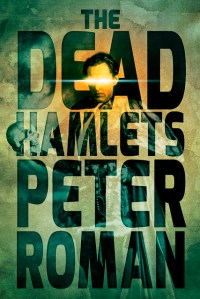
The Hook: The Dead Hamlets by Peter Roman

February 25, 2015
 
The Dead Hamlets
The Hook:

I lost the angel Baal in Berlin during a rainstorm of biblical scale. Some might say the weather was a sign of things to come, or maybe a sign of things past. But if there was one thing I’d learned over the ages, it was that the weather was usually just the weather. Usually. So instead of killing Baal and getting drunk on his heavenly grace, I found a bar on a quiet street and got drunk on regular spirits instead. It wasn’t the same, but I’d learned to make do. 

Make that drunker. I hadn’t been sober in months, not since the Barcelona Incident. The less said about that, the better. Let’s just say if I didn’t have a reason to kill angels before, I had one now.

Peter Roman writes:
The first few paragraphs of a novel are always the most important ones to me as a reader. They’re what’ll hook me or lose me. They tell me what I need to know about the style of the book, the writing level of the author, the genre coordinates — basically the whole works.
That means the first few paragraphs of a novel are also the most important ones to me as a writer. So how did I begin my new novel, The Dead Hamlets? By using the ol’ dark and stormy night intro.

It’s a dangerous game opening a book like that. But it’s the perfect start for a tale that is so strongly connected to the theatre world. The Dead Hamlets is a ghost story of sorts, where the immortal Cross must solve the mystery of who or what is killing the members of the faerie queen’s court. As it turns out, Cross’s search leads him to an ancient and startling secret about the Shakespeare play Hamlet. There’s a long tradition of dark and stormy nights in the theatre — lots of blackouts and thunder sound effects. The first stage directions of Macbeth, for instance, are “Thunder and lightning.” So I was hinting at the subject matter of my book in its opening lines. Shortly after that initial scene, I have Cross stumble into a theatre full of the dead — at which point things really get dark and stormy!

There’s a bit of the noir to this opening, too. Cross often treads the same moral ground as Raymond Chandler’s Philip Marlowe, and he operates in the shadows just as many hard-boiled detective characters do. Cross has seen it all and done it all, thanks to his immortality.

Then there’s the angel Baal, who is mentioned in that first line. Opening with Cross hunting the angel immediately sets the tone for the book and tells us a bit about his character. This is a dark and gritty urban fantasy, populated with dangerous and sometimes unpleasant people. Readers of the first book in the series, The Mona Lisa Sacrifice, will see immediately that Cross is in a grim place mentally as he’s back to hunting angels for their heavenly grace, which he needs to power his supernatural abilities. He loses Baal and then gets drunk (and later beat up), which tells us that he’s still making a mess of his life. Some things never change for Cross.

Plus, there’s that word “Baal.” The very sound of it is dark and foreboding. This is a book where nothing good is going to happen if characters have names like that.Introducing an angel in the very first sentence of the novel also sets up the supernatural nature of this book. Readers won’t be surprised when other crazy creatures show up, such as the real Witches of Macbeth, the eerie Alice from the Alice in Wonderland tales, a demon, a god of the dead — and a very supernatural and very nasty Shakespeare. If you’re down with the angel, then you’ll be fine with everybody else that arrives with weapons drawn.

As for Berlin? It sets the international scope of this book and reinforces the moodiness of the story. Berlin’s not exactly a place with a lot of happy memories and pleasant associations, after all. And I admit it’s a very subtle nod to the Wim Wenders film Wings of Desire, which featured angels hiding out in Berlin. Nick Cave, who has a cameo in the film, would probably feel at home in The Dead Hamlets.The last hook I put in the opening of The Dead Hamlets was the mention of The Barcelona Incident. This kind of lets readers know Cross has a back story and sets up where the book is in the series overall — The Mona Lisa Sacrifice opens and ends on two very different Barcelona incidents, so it’s a rich reference.

There you have it. In a couple of paragraphs I tried to set up the mood and plot of The Dead Hamlets, give an insight into Cross’s state of mind, and describe how the book relates to the first one in the series. Did all these hooks succeed? I suppose the true test of that is if you keep on reading the story. I certainly hope you do, as I’ve got a lot of tales to tell about Cross and his crazy group of friends.
About the author:
Peter Roman is the alter ego of Peter Darbyshire, a Canadian writer. Roman is the author of The Mona Lisa Sacrifice and The Dead Hamlets, while Darbyshire has written the novels The Warhol Gang and Please, which won Canada’s national ReLit Award for best novel. Both of them share an office in Vancouver, where there are no angels. You can follow their adventures at peterdarbyshire.com
#SFWAPro
###
If you’re an author with a book coming out soon and you wish to participate on The Hook, please read this.

Introducing: The Hook

February 25, 2015

The Hook is a guest post feature on this blog that will help promote other authors’ latest science fiction and fantasy books. Optimally each of these will be posted on the book’s release date.

Each post will open with a very short (up to 200 words) quote form the opening of the novel, followed by the author’s brief post consisting of two parts:

1) Elevator pitch — A paragraph or so talking about the book; what is it about, why is it awesome, etc.

2) The Hook — The author will explain why you they chose that specific scene/those specific lines as the opener. What makes it a great hook that will stick with the readers, and what makes it the right place to begin their story?

It is my belief that such posts will be both interesting to the readers and instructive to fellow writers.

I already have a number of authors lined up and will reach out directly to others on my radar whose books I’d like to bring to attention of this blog’s readers.  If you are an author who would like to participate, please have your publicist contact me. Self-published books will occasionally be featured, but those slots will be available by invitation only.

#SFWAPro


Really? A Novel With a Message?

June 6, 2013

The following is a guest post by Luc Reid who recently launched a Kickstarter campaign to help fund the research for his upcoming novel “The Town at World’s End” — a story about a struggling town, based on real strategies for fighting climate change.

Balancing an engaging and entertaining story with Luc’s stated goal of laying out a clear and practical path for actual communities to follow is no easy task. I asked him to talk about the challenges of undertaking such a project and he was kind enough to write the insightful post below.

townworldsend


Really? A Novel With a Message?

By Luc Reid

Telling stories with an ulterior motive is not a well-respected activity. Samuel Goldwyn, then head of MGM Studios, famously told his producers “If you want to send a message, use Western Union,” and the sentiment carries over into fiction–with good reason. Human beings love stories by nature, but we aren’t naturally enthusiastic about being lectured to.

Yet every once in a while, a novel with a message works, or even becomes a classic of literature, for instance George Orwell’s 1984 or Harriet Beecher Stowe’s Uncle Tom’s Cabin. Both of these books championed ideas and created debate and interest in their topics.

Other non-fiction-in-novel-form books, by contrast, have succeeded despite having very questionable literary value. Psychologist B. F. Skinner created a fictional vision of an intentional community in his novel Walden Two, which was powerfully influential and even inspired groups to go out and do their best to make his vision come true. That book remains a top seller, and yet as a story it falls somewhere between “Where’s the conflict?” and “Don’t quit your day job.”

Other writers have had similar story-challenged successes, like Ernst Callenbach’s Ecotopia and Dr. Eliyahu M. Goldratt’s novel of manufacturing efficiency measures, The Goal: A Process of Ongoing Improvement–which as of this writing ranks at #1,269 on Amazon out of all books, despite having been written in 1984 and having no real characters to speak of.

These successes may seem surprising or contradictory of basic common sense about writing, but I think they teach us the same lesson as The DaVinci Code, Twilight, Slaughterhouse Five, Zen and the Art of Motorcycle Maintenance, The Lord of the Rings, 50 Shades of Gray, or Ulysses: that success for a novel isn’t a measure of a single, universal characteristic, or even a measure of how certain universal characteristics work together. Instead, the question is to what extent the novel hits a nerve or fills a need. That need can be romance, escape, enlightenment, intellectual engagement, wish fulfillment, or a way to increase plant productivity by 18%–it just has to be some meaningful and widespread desire.

I worry about my current project, a novel called The Town at World’s End, for which I’m currently running a Kickstarter campaign you can get to through www.TheTownAtWorldsEnd.com . It’s a novel about solving climate change on the community level, about how one struggling town transforms to stop contributing to the problem and build resilience. The thing is, climate change is an issue people tend to avoid if they possibly can. The novel paints a picture of a way of living that’s rewarding and sustainable, and I think the specifics of that lifestyle are very attractive and would enrich people’s lives–but will readers feel the same? Will people seek the book out because they want to find something positive and motivating about climate change, or avoid it because the topic is usually so depressing?

So far, having just launched the campaign the other day, the signs are very tentatively positive. I have a small number of backers, one of whom has even claimed one of the biggest rewards, the chance to name a city and a climate-related disaster that destroys that city.

Even apart from its climate change-related advantages, I intend for this to be a hell of a novel, and I have enough successful fiction writing experience that the prospects look good for that. Still, we’ll have to see. Regardless of whether you’re writing a standard epic fantasy novel or something unusual and possibly ill-advised, like my project, there are variables both of how strong the need is for what you’re providing and how well you speak to those who have that need. Good luck with your next story or book–and wish me luck with mine!


It Came from the Slush Pile

May 6, 2013

It was only yesterday that I wrote a blog post about the UFO slush pile and had this to say:

This doesn’t mean that you can’t sell us a zombie reality TV story about a road trip in space. But it won’t be easy.

Challenge accepted! Less than 24 hours later, this story showed up in the UFO inbox.

Unfortunately I can’t include it in UFO2. A certain level of familiarity with the slush process is necessary to appreciate it. And reading the previous blog post is a must for an even better experience. But I thought it would make a perfect blog post, and also serve as a warning to all those who would submit real zombie/alien/reality TV stories to our slush pile, or any other. So I offered to buy the non-exclusive rights to post the story on this blog.

This is the author’s first story sale, and I’m thrilled to be a part of that.

Without further ado, presenting

alien

IT CAME FROM THE SLUSH PILE

By Rachel Winchester

“Thank you for seeing me on such short notice, Dr. Rostrum.  It’s hard to find a psychiatrist who’s taking on new patie… — of course, I can call you Bob. No problem.

“But, this gets a little personal, and if I could call you Doc– right, yes, I guess you’re used to hearing personal stuff. OK. Bob it is.

“Right, 50 minutes. So…it all began when I was reading submissions for a short story anthology. Science fiction stuff, supposed to be funny. You wouldn’t think there would be that many people willing to put in that kind of work for a shot at $100 or so, but there were thousands of submissions.

“I drank coffee and read manuscripts and drank more coffee and read more manuscripts until my eyelids felt like thresher blades and my eyeballs throbbed with each of their harvesting passes. I divided the stories into piles: FUNNY and NOT FUNNY. Then, to my horror, I realized I had to add another pile.

“ZOMBIES.

“I mean, I like some zombie movies, but I don’t get why they’re a thing, you know? They’ve got to be a symbol for something. Maybe because no one owns zombies. I mean, Lucas, or I guess Disney, isn’t going to sue anyone over zombies.

“And the submissions kept coming. Story after unfunny story about zombies, Bob. ‘I Was Married to a Zombie’, ‘Road Trip with a Zombie’, ‘We Can Zombie It For You Wholesale’, and ‘Do Zombies Dream of Electric Brains.’ And the worst part, Bob?  The absolute. Worst. Part? The zombie stories with bonus-gratuitous-rape.

“It was a veritable Penthouse Forum for Zombies.

“But I’d promised the editor I’d read them all. I didn’t even consider stopping.

“Then I got one in Comic Sans.

“What? No, I’m okay, I’m good…it’s just that…thinking about that font…I can see it…and…

“I’m good, seriously. Right here. Right here on the couch, Bob. See? Breathing normally. But thank you for the water. I think I’m ready to continue.

“Yes, there’s more. I know, you’d think it couldn’t get any worse than Com…that font. But it did. It did.

“Something about seeing a manuscript sent in looking like second-grade teacher’s syllabus jerked me awake, that’s the only way I can explain it. It made me realize how completely irrational it was to be living on coffee and Luna bars, reading slush. It made me realize that I’d been a total bitch to my partner every time she came in to suggest I take a shower or change my clothes. It made me realize that in the background, I’d been vaguely aware she was talking to a camera crew in the other room. About me.

“I know, I know, it sounds like paranoid delusions. But trust me, it wasn’t. It was much worse. You see, I realized then that I was on a reality show.

“Something called True Lives of Starving Writers. They were inter-cutting shots of authors slaving over pirated copies of Scrivener on refurbed laptops, voiceovers about how one guy had to switch to generic beer because he couldn’t afford MGD anymore, not until some magazine accepts his zombie porn story. Then they’d show me just shredding the submissions, and, God, they would even show my relationship coming apart. As you probably know, Bob, my partner had been telling the viewing audience about how she was trapped in this totally loveless marriage.

“I was mortified. I would never…I mean, sometimes I get into my writing, but I never thought I’d cut into our time together, and certainly not for slush.

“Also, and I have to explain this, the inner workings of the slush pile are sacrosanct. I’m doing this to pay my dues too, and learn from the submissions to make me a better writer. I would never go on a reality show and talk about it. And Darla…Darla would never go on one either.

“That’s when I knew something was really wrong. I knew it like I knew the sensation in my a–… my posterior–wasn’t from too much coffee and Luna bars. And I know you’re going to think I’m crazy, but–

“Heh, yeah, I guess you would hear that a lot, Bob. But really, the pain in my…posterior, what I thought was the pain of reading a story with too many zombies and a vampire thrown in for good measure? That pain was actually a probe. An alien anal probe.

“Aliens had kidnapped me, beamed me up, and were making me believe I was on a reality TV show about science fiction writers, and they were doing it because they were on a road trip and they were bored.

“You got that, Bob? I was a goddamn travel game some alien teenagers had picked up during a road trip pit stop on Earth.

“As I realized my plight, a gizmo on the aliens’ space-van dashboard started to beep. It got louder and louder…the aliens started to run around the van, tentacles flailing over their heads.  But I knew that sound. I sat straight up in bed, my alarm clock beeping at top volume. I was in my own bed, and whole thing was a dream!

“But, Bob…waiting for me, on the desk in the corner, were all those unread submissions.  And there, on the floor next to the desk, were three piles of manuscripts:  FUNNY, UNFUNNY…and ZOMBIES.

 END

Rachel Winchester (@RaqWinchester) was born in Roswell, NM, and believes her love for science fiction was inevitable.  She has lived and worked around the world, including in Bucharest, Kuala Lumpur, Sana’a, Athens, Caracas, and Los Angeles. She now works as a government consultant.  This is her first story sale.


Submitomancy Premium Features Explained – A Guest Post by Sylvia Spruck Wrigley

January 4, 2013

submitomancy

Ever since Sylvia Spruck Wrigley announced the project she’s spearheading to create an advanced submission tracking web site, the most common question I’ve seen was: “If I’m not willing to pay for Duotrope service, why should I give money to this?”

So I asked Sylvia to explain the premium Submitomancy features in some more detail. Also, it’s very important to note that all basic functions of the site will be available for everyone to use for free.

Sylvia’s post, below:

The core of the Submitomancy service will be free. This allows writers to record their manuscripts and track their submissions. But the really fun stuff, in my opinion, is in the pay-for service.

Here’s an example of the process that a subscriber to the pay-for service might follow. This is all optional, of course! Subscribers will obviously choose the options that they find most useful and although I am focused on short stories for this example, we’ll be supporting poetry as well. Here’s my own personal vision of what I would do having completed a new story.

First I enter my manuscript details. The manuscript database is part of the core service but as a subscriber, I’ll get a secondary page of data that I can track (I’ll be refining down the details of this with the early access users). I’ll also have the option to share the title of my latest masterpiece with my friends. In the future, I might be able to submit it directly to my personal critique partners (who are of course, also using the site and loving it) but for now, let’s assume my story is shiny and perfect.

For a free search, I would get a basic list of markets that I can then read through to make a decision.

But as a subscriber, I get power searches, which have a lot more granularity. My preferences are saved as a part of my profile. For example, a user might set his default to show pro- and semi-pro markets who have sent personal responses in the past, sorted by acceptance rates. My personal default might only show me SFWA qualifying markets, unless there are fewer than three matches, in which case I want to see all matching pro-markets. The point is that, once I’ve set this up, I’ll see the key markets for my manuscript with a single press, with the ability to expand the possibilities at search time. Markets that I have marked as favorites will be highlighted.

Once I have my list, I can re-sort on the fly and click through to look at a market profile.

Everyone can see general market information along with the average response time and average acceptance rate. As a subscriber, I’ll get extra information, including the recent responses and the average response rate for that market over the past 6 weeks. I’ll get a break-down of the acceptance rate with, if we can get the data, percentages by author gender and story word count. This personalised market listing will also show my history with that market: my submissions, response times and type of response. This means if I am an “outlier”, I have my past data on the page for reference. If the market has sent me personal comments in the past and I entered those comments into the system, they will show up for me here.

As a subscriber, I will also see a button on the market page to generate a cover letter. If I press this button, the system takes four pieces of information:

* My manuscript details,
* My most recent three sales (which I can override with my three favorite sales),
* The market details,
* The market guidelines (if cover letters are mentioned).

With this information, the system will create a cover letter for me to use. I can copy the text (and edit it if I like, for example if I am on a first-name basis with the editor) and then paste it into my submission, whether it’s postal, form-based or an email.

Once I’ve done the submission, I can send an update to my friends so that they can cheer me on. Now the waiting begins.

Quite honestly, I spend too much time watching market pages so an important aspect of the pay-for service for me is the notification service. This is a process which watches my submissions for me and maps them against the recent responses. When specific conditions are met, I’ll receive a private message which could also be sent to my email or Twitter account to alert me.

An obvious alert is when a market responds to a manuscript that has been out for the same number of days as my story has been with them. That function alone will seriously help my pointless refreshing problem. But there will be a number of options which I plan to refine with the early access users.

Some examples: I might notice a market has been silent for a month and ask for a notification to show me when a response has been reported. I can see Analog recent responses are a lot longer than they have been traditionally and sign up for an alert when their response rate drops below 60 days. And for every submission, I’d like to be notified if a response is past due so I can consider querying. That query letter can be generated with the manuscript title and date of submission, along with the correct procedure for querying at that market.

Once I get the acceptance (this is my fantasy system, so of course every response is an acceptance), I enter it into my personal database with the pay rate, the exclusivity period and any personal comments. I can update it when I receive the contract, when I receive payment and when the story has been published.

Now I can set up a new notification to alert me when the exclusivity period is finished. I will have a search available to show me reprint markets. This might get a bit complicated: there are so many different rights and contracts vary, so I suspect that for every story, the writer will have to go through the markets and see what works. Eventually, I’d like to be able to search for audio publications and foreign language markets, if I still have those rights available. Certainly, I’d love to be prompted to offer my story to a wider market.

That’s my dream. I can’t guarantee that every aspect of that process will be available at launch but I hope that most of it will be in place. Especially that 100% acceptance rate on my account.

When Submitomancy goes live, the premium service will cost $20 per year, not $50 Duotrope is now charging.
You can donate to the Submitomancy crowdfunding campaign on IndieGoGo.